Close
Whether you recently purchased a boat in another state or you are relocating your vessel to a new marina, choosing the right boat transport methods can make a major difference in safety, cost, and overall logistics.
At Set Sail Boat Transport, we understand that you want the transport process to be predictable, secure, and professionally managed from pickup to delivery. While the industry offers several ways to relocate a vessel, each option has different advantages depending on your boat’s size, the distance involved, and the type of hull.
Understanding how these transport options work helps you decide which solution protects your boat while keeping your move efficient and stress-free.
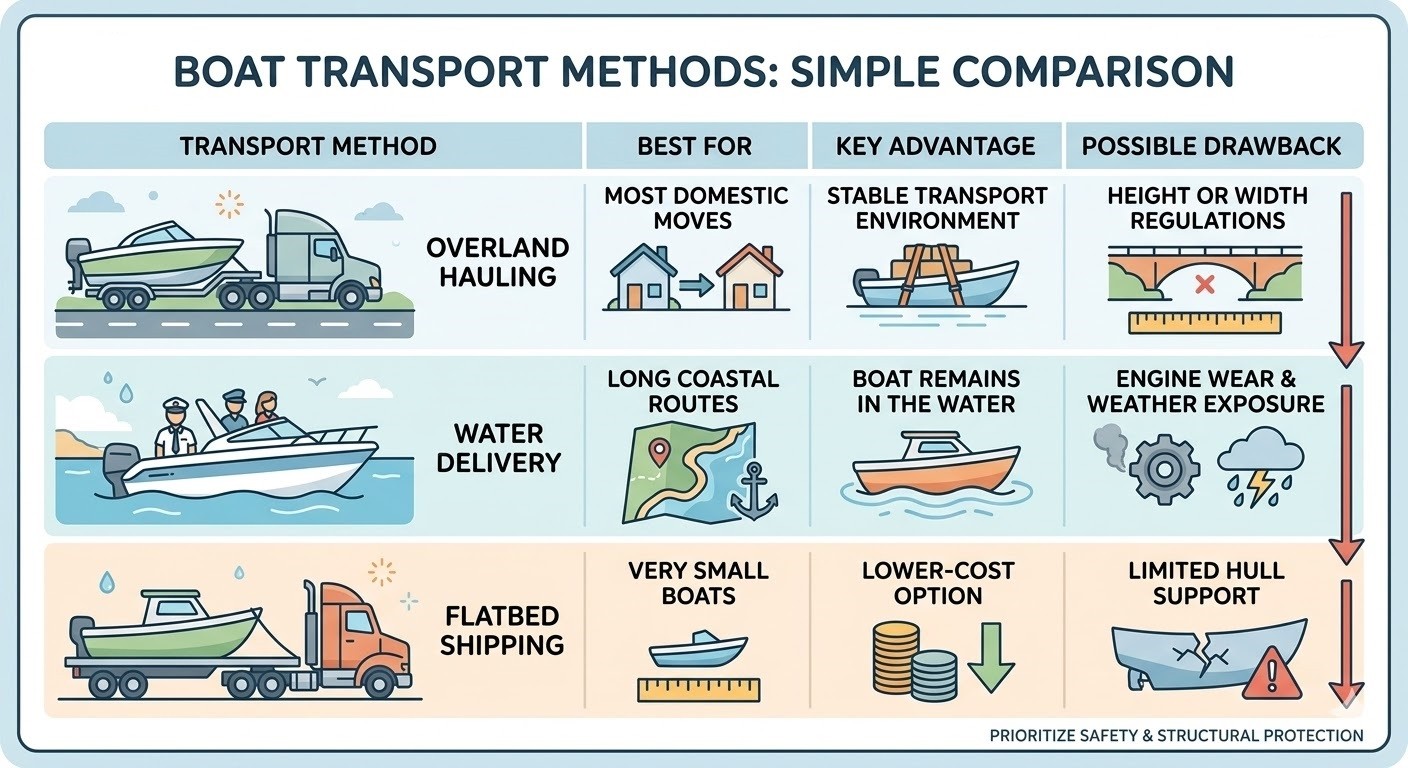
When researching boat transportation methods, you will generally encounter three primary options: overland hauling, flatbed shipping, and water delivery. Each approach serves a specific purpose depending on the vessel size, location, and travel distance.
Some methods prioritize speed, while others focus on cost savings or convenience. However, safety and structural protection should always remain the top priorities when moving your vessel.
Below is a simple comparison of the most common options.
Transport Method | Best For | Key Advantage | Possible Drawback |
Overland Hauling | Most domestic moves | Stable transport environment | Height or width regulations |
Water Delivery | Long coastal routes | The boat remains in the water | Engine wear and weather exposure |
Flatbed Shipping | Very small boats | Lower-cost option | Limited hull support |
As you evaluate these options, it becomes clear that not every approach provides the same level of protection for your vessel.
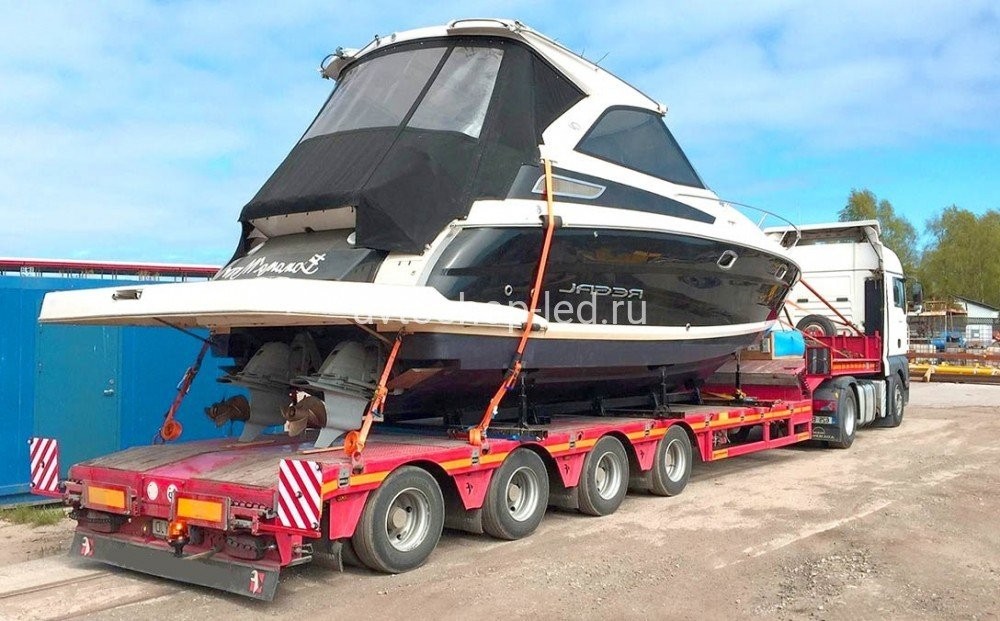
Overland hauling is one of the most reliable boat transport methods for domestic moves. Instead of operating the boat over long distances, your vessel is lifted from the water and placed on a specialized trailer designed specifically for marine hulls.
This approach removes many of the risks associated with long voyages on open water. Your engines, rigging, and onboard systems remain inactive during the trip, preventing unnecessary wear and mechanical stress.
Professional hauling equipment also allows your boat to remain stable throughout the journey. Adjustable support pads distribute weight evenly across the hull so pressure points do not form during transport.
For smaller recreational vessels, this method is particularly effective when planning small boat transport across regional or cross-state routes. With the right trailer setup and proper tie-downs, your vessel remains secure from the moment it leaves the marina until it reaches its destination.
A common misconception among boat owners is that any truck or trailer can move a boat. In reality, professional overland transport relies on hydraulic trailers specifically engineered for marine vessels.
These trailers allow us to adjust support arms and padded bunks to match the unique shape of your hull. Whether your boat has a deep keel, stepped hull, or complex geometry, the trailer can be configured to maintain balanced weight distribution.
This precision matters because boats are not built like conventional cargo. Fiberglass hulls require even support across structural points such as stringers and bulkheads. Improper loading can create stress that leads to gelcoat cracks or structural strain.
Hydraulic trailers also help maintain a lower overall height during transport. This is an important factor when planning routes under bridges and overpasses. By keeping the vessel positioned correctly on the trailer, we maximize road clearance and improve overall transport safety.
Water delivery may sound appealing because the boat simply travels to its destination under its own power. However, when evaluating different boat transport methods, it is important to consider the hidden costs associated with long water passages.
Operating your boat for extended distances places additional hours on the engine, which can increase maintenance requirements. Fuel consumption is also significantly higher on the water compared to transporting the vessel by road.
Weather conditions create another unpredictable factor. Storm systems, rough seas, and changing currents can delay delivery schedules or introduce safety risks during the trip.
Even routine wear can add up over time. Rigging tension, hull stress from waves, and continuous engine operation all contribute to mechanical fatigue that may require repairs after the journey.
After evaluating the different boat transportation methods, many owners find that overland hauling provides the best balance of safety, predictability, and efficiency.
At Set Sail Boat Transport, we focus on specialized overland solutions because they allow us to maintain complete control over the transport environment. Our trailers, route-planning strategies, and experienced drivers work together to ensure your vessel remains secure from the start.
You are not just hiring a driver to move cargo. You are working with professionals who understand hull structures, load balancing, and the unique challenges involved in transporting boats across long distances.
By understanding the strengths and limitations of different boat transport methods, you can make a confident decision that keeps your boat safe during relocation.
Set Sail Boat Transport specializes in secure overland hauling designed to protect your vessel throughout the entire journey. Our experienced team manages route planning, loading coordination, and transportation arrangements so you can prepare for your next trip on the water.
Are you planning to move your boat? Contact our team today for a professional quote and let us handle the details of your boat shipping.