Close
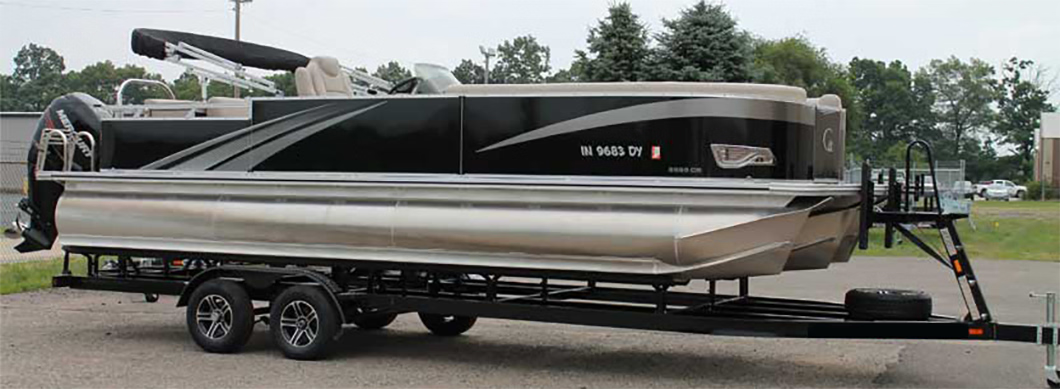
Owning a pontoon is about having a floating space for memories, relaxation, and fun. To keep it running smoothly and looking great, consistent pontoon maintenance is essential.
From the aluminum logs to the deck and engine, each component has unique needs that, if ignored, can shorten your boat’s lifespan or lead to costly repairs.
We have helped countless owners preserve their pontoons and move them safely. Through years of experience, we’ve learned that proactive care is key to extending the life of your vessel and ensuring every outing is stress-free.
Your pontoon’s aluminum logs are its backbone, providing flotation and structural support. Because aluminum is reactive, it’s prone to oxidation and galvanic corrosion. Oxidation initially appears as a chalky gray layer, which is mostly aesthetic but can eventually cause pitting.
To keep your logs in top shape:
If you notice bubbling or white powdery spots, it could indicate stray current from the electrical system. Properly maintaining your logs is a critical part of overall pontoon maintenance and keeps your vessel safe on the water.
The deck and upholstery see the most wear and tear. Modern pontoons feature marine carpet or woven vinyl flooring, while the seating is typically marine-grade vinyl.
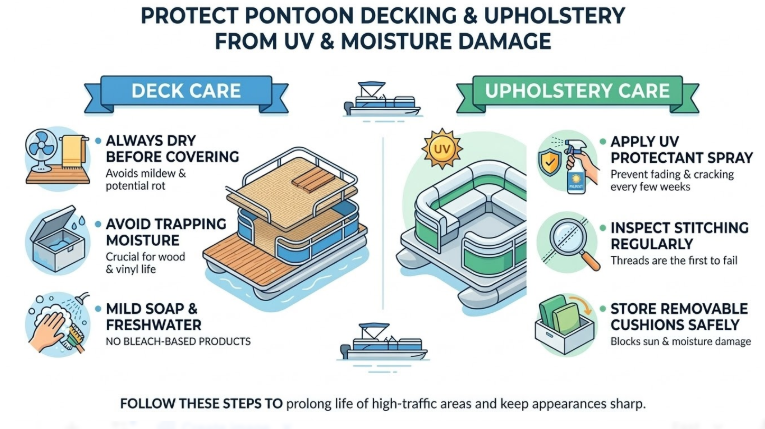
Following these steps not only protects your pontoon’s appearance but also prolongs the life of every high-traffic area.
The outboard engine powers your fun, and neglecting it can compromise safety. Pontoons operate at low speeds, which can cause carbon buildup in the engine.
During pontoon maintenance, be sure to:
Routine engine checks reduce the risk of stalls, overheating, or long-term engine damage.
One area that is overlooked is the under-deck structure. Pontoons rely on cross-members and “M” brackets connecting the logs to the deck. Over time, vibration and engine torque can loosen bolts or welds.
To maintain your vessel’s integrity:
A solid foundation ensures predictable handling and prevents stress damage to your aluminum logs.
If you plan to relocate your pontoon or store it for the winter, proper preparation is important. Pontoons have a high profile, making them sensitive to wind drag during transport.
Proper preparation protects your boat during overland transport and ensures it’s ready for the next outing.
Consistent care prevents minor issues from becoming major repairs. Here’s a simple checklist for maintaining your pontoon boat to guide your routine:
Component | Frequency | Action Required |
Aluminum Logs | Annually / Every 50 Hours | Clean, inspect, check for corrosion |
Sacrificial Anodes | Monthly | Replace if more than 50% worn |
Engine Oil / Filter | Every 100 Hours / Annually | Change oil, inspect for metal debris |
Fuel System | Every Fill-up | Add stabilizer, check for water |
Vinyl Upholstery | Bi-Weekly | Clean, apply UV protectant |
Structural Bolts | Annually | Tighten cross-members and brackets |
These additional measures complement regular maintenance and ensure your pontoon remains in top condition year after year.
By following a structured pontoon maintenance routine, you’re investing in your boat’s safety, performance, and longevity. From protecting aluminum logs and vinyl upholstery to engine care and structural inspections, every step contributes to a reliable and enjoyable boating experience.
At Set Sail Boat Transport, we help owners protect their investment through expert advice and trusted transport solutions. Whether you’re moving a pontoon to a new lake or performing seasonal upkeep, a consistent maintenance strategy keeps your vessel ready for the next trip.
Contact Set Sail Boat Transport today to learn more about our services and get your pontoon ready for smooth rides and hassle-free pontoon transport this season.