Close
Standing behind the helm gives you a unique sense of freedom, but that freedom comes with responsibility. Understanding boating etiquette ensures your time on the water is safe, enjoyable, and respectful to other captains.
Proper etiquette isn’t just about manners. It protects lives, preserves vessels, and maintains harmony on busy waterways.
At Set Sail Boat Transport, we see how professionalism on the water impacts both the safety and the longevity of vessels. Whether you’re navigating a weekend cruiser or preparing for a cross-country boat transport move, respecting the unwritten rules of the water keeps your investment secure and enhances the overall boating experience.
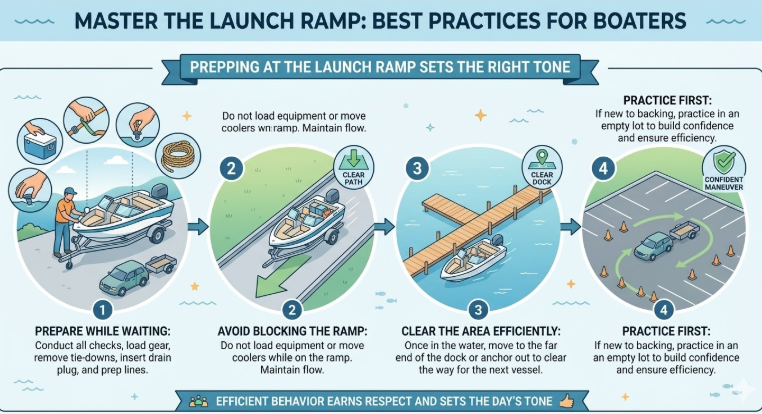
The first impression you make on fellow boaters starts at the launch ramp. Many conflicts occur before the boat even hits the water, so handling this area efficiently is part of good boating conduct.
If you’re new to backing a trailer, practice in an empty lot to develop confidence. Efficient ramp behavior earns respect and sets the tone for the day.
Your VHF radio is a safety tool, not a social device. Developing concise and professional communication is a subtle but essential aspect of boating etiquette.
Respecting radio protocols ensures you contribute to a safer environment for everyone in the vicinity.
How you handle your boat affects everyone around you. One of the most important principles of sailing etiquette is controlling your wake.
Your wake isn’t just a hassle. It’s a potential hazard. Practicing mindful speed and passing protocols protects fellow boaters and prevents unnecessary tension on the water.
Encountering a commercial tug, barge, or yacht in transit requires extra caution. These vessels are less maneuverable and involved in high-stakes operations like yacht transport.
Professional courtesy around working vessels shows your experience and commitment to maritime safety.
While rules can be technical, simple adherence to right-of-way principles is a key part of boating etiquette. The table below summarizes common scenarios:
Scenario | Stand-on Vessel | Give-way Vessel | Captain’s Responsibility |
Meeting Head-on | Neither | Both | Alter course to starboard to pass port-to-port. |
Crossing Paths | Vessel on the right | Vessel on the left | The give-way vessel should yield behind the stand-on vessel. |
Overtaking | Vessel Being Passed | Vessel Passing | The passing vessel must stay clear. |
Power vs. Sail | Sailing Vessel | Power Vessel | The power vessel must give way to the sail vessel under engine power. |
Following these guidelines prevents collisions and fosters trust among waterway users.
Anchoring etiquette is crucial, especially in crowded coves or raft-up locations.
Being considerate ensures everyone enjoys the natural environment without conflict.
Your crew reflects your standards. Teaching them proper docking, signaling, and wake management is necessary.
A knowledgeable crew not only improves safety but also demonstrates your leadership on the water.
Good sailing etiquette extends to vessel care. Proper maintenance protects both your investment and the safety of those around you:
Whether preparing for local cruises or coordinating small boat transport, advance care prevents emergencies that could affect other boaters.
Respecting waterways goes beyond manners. It’s about stewardship.
Practicing eco-conscious behavior maintains the waterways for future generations and reflects positively on the boating community.
Boating is a privilege, and perfecting boating etiquette enhances both safety and enjoyment. From ramp efficiency to wake control, VHF communication, and environmental responsibility, every choice you make impacts the broader boating community.
At Set Sail Boat Transport, we uphold these same standards in every vessel we handle, whether moving a small craft across town or coordinating complex yacht transport.
Contact us today to get your vessel ready for its next crossing, whether on the water or through our professional transport services.