
hacklink hack forum hacklink film izle hacklinkCellesim Europe regional planSpincobets10 girişcasibomjojobetvdcasino girişsonbahisalobetbets10yakabetmavibetgalabetromabetmavibetkingbet188lunabetlunabetjojobet girişjojobetnakitbahisjojobetmavibetHoliganbetnitrobahistipobeten iyi bahis sitelerirestbetrestbet girişcasino sitelerividobet
loader image
set sail logo no contact
How Heavy is a Pontoon Boat
March 24, 2026

How Heavy is a Pontoon Boat? A Weight Breakdown by Size

How heavy is a pontoon boat is a common question we get all the time when folks are planning trips, thinking about storage, or preparing for transport. It affects everything from trailer selection and transport costs to fuel economy and towing safety.

So let’s break it down clearly. We’ll also touch on the average weight of a pontoon boat so you know what to expect before you hit the road. Understanding these numbers helps you plan smarter, avoid surprises, and enjoy your time on the water.

Pontoon Boat Weight: The Basics

When you ask, “How heavy is a pontoon boat?” the short answer is: it depends. Pontoon weights vary significantly depending on size, tube configuration, engine, and onboard accessories. Here’s a baseline:

  • Small pontoons (16–18 ft): ~1,200-1,800 lbs (dry, no engine/fuel)
  • Mid-size pontoons (18–20 ft): ~1,500-2,200 lbs
  • Standard (20–24 ft): ~2,000-2,800 lbs
  • Large or luxury (25+ ft): ~3,000-5,000+ lbs

These are dry weights. Add a typical outboard engine (300–500 lbs), a full tank of fuel (~300-500 lbs), and passengers, and the total easily exceeds the average weight of a pontoon boat for your model.
How Weight Varies by Size and Configuration

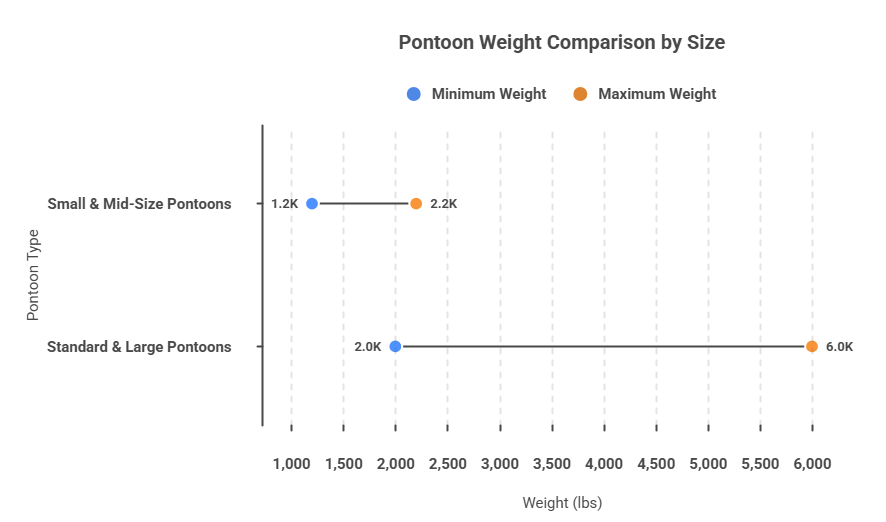
This image discusses “How heavy is a pontoon boat?” by showing a graph that illustrates the weight of small & mid-sized and standard & large pontoons.

Small & Mid-Size Pontoons

Smaller pontoons are perfect for family fun days, fishing, or gentle cruising on lakes. For a 16-20 ft pontoon:

  • Weight range: 1,200-2,200 lbs (dry)
  • Towing: Compatible with many SUVs and half-ton trucks
  • Capacity: Excellent for day trips with family or friends

Standard & Large Pontoons

For 20-24 ft models, or 25+ ft luxury tritoons:

  • Dry weight: 2,000-5,000+ lbs
  • With engine & fuel: 2,500-6,000+ lbs
  • With passengers & gear: Add another 500-1,500 lbs

Factors That Add Weight

Understanding “How heavy is a pontoon boat?” requires looking beyond length. Key weight contributors include:

  • Tubes: Tritoon models (3 tubes) add hundreds of pounds compared to standard two-tube designs.
  • Engine: Bigger horsepower adds 300–500+ lbs.
  • Fuel & Fluids: Full tanks, water, and batteries can add 300–500 lbs more.
  • Accessories: High-end stereos, towers, and furniture may contribute 500+ lbs.
  • Trailer: A trailer typically adds 1,000-1,500 lbs, essential for calculating towing capacity.

Considering all of this, the average pontoon weight for a standard 22-24 ft boat hovers around 2,500 lbs dry. These numbers also help when you are moving a larger vessel and considering a professional yacht transport, or estimating towing requirements and planning transport logistics.

Why Weight Matters for Transport

If you’re moving a pontoon long-distance, knowing “How heavy is a pontoon boat?” is crucial:

  • Determines the right truck and trailer
  • Helps calculate transport costs per mile
  • Ensures compliance with road weight limits and permits

Professional services like pontoon boat transport handle over‑the‑road delivery safely, using 3‑axle trucks and 2‑axle trailers rated for heavy loads. Remember, we do not transport via waterways.

Trailer & Towing Tips

To tow safely:

  • Ensure your trailer is rated for the total weight of boat + fuel + passengers + gear.
  • Use a trailer with brakes if your pontoon exceeds local legal weight limits.
  • Check tongue weight and hitch ratings before starting your trip.
  • Consider route conditions. Steep grades, bridges, and curves can affect towing safety.

There are over 11.6 million registered recreational boats in the United States, many of which are small, trailerable vessels like pontoons. Following these steps reduces wear on your truck, trailer, and pontoon, making your journey smoother and safer.

Transportation Costs

Pontoon transport costs depend on:

  • Distance traveled
  • Boat size and total loaded weight
  • Pickup and delivery locations
  • Need for pilot cars, bucket trucks, or police escorts
  • Additional cargo insurance

Typical costs range from $5-$16 per mile, but large boats, special permits, or extra equipment can raise the price. Weather, construction, or route changes may also impact delivery timing. Planning ahead ensures fewer surprises and a smoother process.

What Transporters Don’t Provide

Professional boat transport services do not include boat cleaning. Whether it’s smaller boats or cross-country trips with sailboat transport, cleaning is the marina’s responsibility. Boats inevitably get dusty or grimy in transit, so schedule a post-delivery wash at the receiving end.

Quick Reference: How Heavy Are Common Pontoons?

Length

Dry Weight (lbs)

16-18 ft (Small)

1,200-1,800

18-20 ft (Mid)

1,500-2,200

20-24 ft (Standard)

2,000-2,800 (average pontoon weight)

25+ ft (Large)

3,000-5,000+

Tips for Owners & Buyers

  • Always check the manufacturer’s capacity plate. It tells you the max weight and passengers.
  • Include engine, fuel, gear, and people when calculating total weight.
  • Compare your boat’s dry weight to the average pontoon weight to ensure trailer and towing vehicle adequacy.
  • For long-distance moves, consult professionals familiar with permits and heavy loads.
  • Always plan extra margin for fuel, gear, or passengers beyond the rated capacity. It adds safety and peace of mind.

FAQs

A 25‑foot pontoon typically weighs 2,000-2,500 lbs dry, depending on tube configuration, materials, and outfitting. Add engine, fuel, and gear, and the total weight can exceed 3,000 lbs.
Capacity varies by model. Larger pontoons (20+ ft) can hold 10-14 adults; smaller models seat 6-8. Always check the capacity plate.
Yes, trailers must be rated for the total loaded weight. Some states require permits or pilot cars for oversized loads.
Knowing how heavy a pontoon boat is ensures you choose the right equipment, calculate costs, and meet road weight regulations.
← Go Back Read More →
Copyright 2025 © All Rights Reserved
starchevron-down