Menu Links
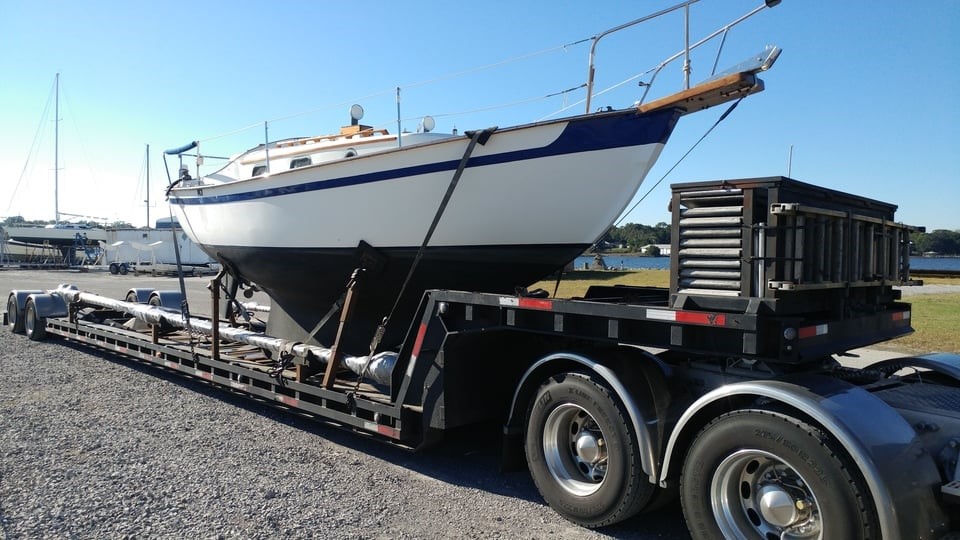
[vc_row][vc_column][vc_column_text css=""]Preparation and knowing what to expect can have a great impact when it comes to shipping a boat cross-country. Moving your boat across the country isn’t as simple as hooking it to a trailer. It takes the right equipment, planning, and following transport rules.
At Set Sail Boat Transport, we make the process simple for you. We will share with you the costs and the factors that affect them, and we will also tell you what you need to do before the move.
Our goal is to make sure your boat reaches its new location safely and without any stress.
The cost of shipping the boat usually ranges between $5.00 and $16.00 per mile. Every boat and route is different, so prices can change from one move to another. Size, weight, and distance matter the most, but there are other factors that affect the final quote, too.
Set Sail Boat Transport, an expert boat transport company, gives you a clear and complete quote. It will include everything, like permits, escorts, and insurance, so there are no complications later.
Are you shipping a boat cross-country? You need to understand what drives the price so it can help you make better decisions and reduce unnecessary expenses. While every shipment is different, there are many consistent factors that are most important in deciding the final cost.
Let's go over each factor in detail:
The biggest factor in the cost of shipping the boat is its size and weight. We may need special trailers, extra permits, or pilot cars to move it safely if your boat is large. Heavier boats also need stronger equipment and more fuel, which can raise the total cost.
It’s simple. The farther you go, the more it costs to ship the boat. Your boat covers thousands of miles when it travels cross-country. That means more fuel, tolls, and mileage fees.
Some marinas or pickup spots can be hard to reach with large trailers. We might need to take detours or use extra equipment to load your boat when that happens. Shipping your boat becomes quicker and smoother for both of us if your pickup and drop-off are easy to access.
We may need state permits, pilot cars, or even police escorts to move it safely on highways if your boat is oversized. Each state has different rules, and these extra steps can raise the cost, especially for wide or tall boats.
Just like any transport service, fuel prices can affect the cost of shipping the boat. When diesel prices go up or down, your quote might change a little between the time you book and the day we move your boat.
Summer and early fall are busy times for shipping the boat. Many people move their boats then, so prices can be higher. You can reduce costs and get faster delivery dates if you plan your move in the off-season, like winter or early spring.
Having full insurance is important to make sure your boat stays protected during transit. You may need more coverage if your boat is high in value, which can raise the cost a little.[/vc_column_text][vc_single_image image="1462" img_size="500x500" alignment="center" css=""][vc_column_text css=""]
Before shipping a boat cross-country, taking time to prepare it helps things run smoothly the whole way.
Don’t forget to book a cleaning when your boat reaches the marina. Long trips often leave a layer of dust, bugs, or salt behind.
You can cut down expenses with a few strategic decisions:
Even with the best drivers, things like bad weather, roadwork, or permit delays can still happen. That’s why we always suggest you:
At Set Sail Boat Transport, we keep in touch with you the whole time, so you always know where your boat is and what’s happening next.
[/vc_column_text][/vc_column][/vc_row][vc_row][vc_column][vc_tta_accordion][vc_tta_section title="1. How much to ship a boat across the country?" tab_id="1761943587137-13f70de8-a6d5"][vc_column_text css=""]You can expect the cost to be between $5 and $16 per mile. The best way to know your exact cost is to get a quote from a professional boat transport company like ours.[/vc_column_text][/vc_tta_section][vc_tta_section title="2. What is the cheapest way to transport a boat?" tab_id="1761943587149-0e81f191-4d34"][vc_column_text css=""]The most affordable way to transport your boat is usually on an open trailer or through shared route transport. You can save even more if you are flexible with your dates and choose easy-to-reach pickup spots.[/vc_column_text][/vc_tta_section][vc_tta_section title="3. Can a 40-foot boat cross the Atlantic?" tab_id="1761943702339-047ace76-c6c7"][vc_column_text css=""]Yes, you can, but only if your boat is ready for long-distance travel. Many owners choose yacht transport services or roll-on/roll-off (RORO) shipping instead. These professional methods are necessary to make sure your boat travels safely.[/vc_column_text][/vc_tta_section][vc_tta_section title="4. Do you clean the boat after delivery?" tab_id="1761943724549-1f15b3a8-783c"][vc_column_text css=""]No, we do not offer cleaning services. Boat cleaning is handled by the marina at the receiving end. We recommend that you schedule one immediately upon arrival.[/vc_column_text][/vc_tta_section][vc_tta_section title="5. What happens if there’s a delay?" tab_id="1761943723384-a5b35538-f0b5"][vc_column_text css=""]Sometimes, weather or route changes can cause small delays. But you don’t have to worry when you work with us. We will communicate quickly and keep you updated at every stage of the trip.[/vc_column_text][/vc_tta_section][/vc_tta_accordion][/vc_column][/vc_row][vc_row][vc_column][vc_column_text css=""]
Preparation, the right carrier, and clear expectations are your best tools when you are shipping a boat cross-country. At Set Sail Boat Transport, we combine practical expertise with transparent quotes and careful planning to deliver your boat safely.
Get your free quote today, and let us take care of the transport while you make plans for your next cruise.[/vc_column_text][/vc_column][/vc_row]