Menu Links
If you own a trailer, it can make boat moves more convenient for you. But it also brings up an important question that do you have to insure a trailer? The answer isn’t always simple because it depends on your state’s laws, the type of trailer you own, and how you use it. Even when insurance isn’t required, it still gives you valuable protection by keeping you covered against theft, accidents, and unexpected damage.
Here, we’ll cover the insurance requirements you need to know, the available coverage options, and how insurance can protect your trailer in transit or storage.
The first thing trailer owners should understand is that most states don’t require a separate policy for smaller personal-use trailers like utility trailers. Typically, these units are covered under your auto insurance policy when attached to your tow vehicle.
That said, there are situations where a dedicated trailer insurance coverage policy becomes essential:
Checking both your car insurance and state regulations ensures you avoid costly coverage gaps. If you’ve ever asked yourself, “Do you have to insure a trailer?”, the answer becomes clear that it depends on how large your trailer is, how you use it, and how much it costs.
Just like cars, you can insure your trailer under several different policy types. Understanding these helps you choose the right protection.
Covers you if your trailer causes injury or property damage. For instance, if it detaches and collides with another vehicle, liability coverage prevents you from paying out of pocket.
These options cover damage to the trailer itself. It pays for losses due to theft or fire, while collision applies if the trailer overturns or collides with another object.
If your trailer carries valuables, such as boats or household goods, cargo coverage ensures the items are protected in case your boat gets damaged.
Because a travel trailer doubles as a temporary living space, coverage often resembles homeowners’ insurance. It can protect belongings, personal liability, and even damage from natural disasters. This is why it’s better for you to choose our boat transportation services so that we can make sure everything goes well during the transit and your boat remains safe.
If another driver without proper insurance damages your trailer, this coverage fills the gap.
| Coverage Type | Best For |
| Liability Coverage | Anyone planning to tow a trailer on public roads who wants basic protection against accidents. |
| Comprehensive & Collision Coverage | Trailer owners who want full protection from accidents, theft, fire, or vandalism. |
| Cargo & Contents Protection | People hauling boats, equipment, or valuable personal belongings. |
| Specialized Travel Trailer Coverage | RV and travel trailer owners who use their trailers as a temporary living space. |
| Uninsured/Underinsured Motorist Coverage | Owners worried about accidents caused by drivers without enough insurance. |
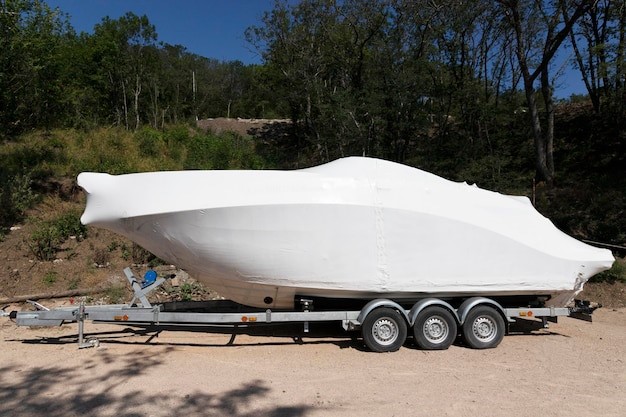
Transporting a trailer over long distances exposes it to unique risks. While professional haulers strive to deliver on schedule, delays in your transportation journey can happen due to weather, permits, or construction-related route changes.
Here’s why insurance matters during transit:
It can cover the repair costs if your trailer sustains damage on the road.
From hail to high winds, comprehensive coverage can reduce financial loss.
Essential when transporting boats, since moving costs can range from $5.00 to $16.00 per mile. Factors like pilot cars, bucket trucks, or police escorts may also be required.
If you leave your trailer in the driveway, backyard, or even a storage facility, it can become an easy target. Thieves can hitch it up and be gone in minutes. With insurance, you won’t be left covering the loss on your own.
Imagine discovering your trailer damaged by fire, broken into, or vandalized. These situations can be bothersome and expensive, but your insurance policy helps take that financial weight off your shoulders.
Storms, hail, or falling branches can strike without warning. With the right coverage, you’re prepared for these unexpected events.
Often, your car insurance extends liability coverage to your trailer while it’s attached to your tow vehicle. However, for enclosed trailers or travel trailers, a separate trailer insurance coverage policy may be necessary.
Larger trailers such as RVs, boat trailers, or commercial units typically need comprehensive policies. These not only cover damage to the trailer but also protect the cargo and offer broader liability coverage.
Yes. Comprehensive policies protect against theft, vandalism, and other damage to the trailer even when it’s not being used. For long-term storage, this protection is highly recommended for trailer owners.
If you’re thinking about do you have to insure a trailer, keep in mind that you may not always require insurance. But it’s often the smartest move for protecting your trailer. From long-distance transport to months in storage, unexpected events like theft, weather, or accidents can result in high costs. The right policy ensures your investment is covered, giving you peace of mind every step of the way.
At Set Sail Boat Transport, we treat your trailer and vessel as valuable assets. While we strive to deliver on time, factors like permits, weather, or road closures can sometimes cause unavoidable delays. Having proper insurance ensures you’re protected no matter the situation.