Close
[vc_row][vc_column][vc_column_text css=""]Preparation and knowing what to expect can have a great impact when it comes to shipping a boat cross-country. Moving your boat across the country isn’t as simple as hooking it to a trailer. It takes the right equipment, planning, and following transport rules.
At Set Sail Boat Transport, we make the process simple for you. We will share with you the costs and the factors that affect them, and we will also tell you what you need to do before the move.
Our goal is to make sure your boat reaches its new location safely and without any stress.
The cost of shipping the boat usually ranges between $5.00 and $16.00 per mile. Every boat and route is different, so prices can change from one move to another. Size, weight, and distance matter the most, but there are other factors that affect the final quote, too.
Set Sail Boat Transport, an expert boat transport company, gives you a clear and complete quote. It will include everything, like permits, escorts, and insurance, so there are no complications later.
Are you shipping a boat cross-country? You need to understand what drives the price so it can help you make better decisions and reduce unnecessary expenses. While every shipment is different, there are many consistent factors that are most important in deciding the final cost.
Let's go over each factor in detail:
The biggest factor in the cost of shipping the boat is its size and weight. We may need special trailers, extra permits, or pilot cars to move it safely if your boat is large. Heavier boats also need stronger equipment and more fuel, which can raise the total cost.
It’s simple. The farther you go, the more it costs to ship the boat. Your boat covers thousands of miles when it travels cross-country. That means more fuel, tolls, and mileage fees.
Some marinas or pickup spots can be hard to reach with large trailers. We might need to take detours or use extra equipment to load your boat when that happens. Shipping your boat becomes quicker and smoother for both of us if your pickup and drop-off are easy to access.
We may need state permits, pilot cars, or even police escorts to move it safely on highways if your boat is oversized. Each state has different rules, and these extra steps can raise the cost, especially for wide or tall boats.
Just like any transport service, fuel prices can affect the cost of shipping the boat. When diesel prices go up or down, your quote might change a little between the time you book and the day we move your boat.
Summer and early fall are busy times for shipping the boat. Many people move their boats then, so prices can be higher. You can reduce costs and get faster delivery dates if you plan your move in the off-season, like winter or early spring.
Having full insurance is important to make sure your boat stays protected during transit. You may need more coverage if your boat is high in value, which can raise the cost a little.[/vc_column_text][vc_single_image image="1462" img_size="500x500" alignment="center" css=""][vc_column_text css=""]
Before shipping a boat cross-country, taking time to prepare it helps things run smoothly the whole way.
Don’t forget to book a cleaning when your boat reaches the marina. Long trips often leave a layer of dust, bugs, or salt behind.
You can cut down expenses with a few strategic decisions:
Even with the best drivers, things like bad weather, roadwork, or permit delays can still happen. That’s why we always suggest you:
At Set Sail Boat Transport, we keep in touch with you the whole time, so you always know where your boat is and what’s happening next.
[/vc_column_text][/vc_column][/vc_row][vc_row][vc_column][vc_tta_accordion][vc_tta_section title="1. How much to ship a boat across the country?" tab_id="1761943587137-13f70de8-a6d5"][vc_column_text css=""]You can expect the cost to be between $5 and $16 per mile. The best way to know your exact cost is to get a quote from a professional boat transport company like ours.[/vc_column_text][/vc_tta_section][vc_tta_section title="2. What is the cheapest way to transport a boat?" tab_id="1761943587149-0e81f191-4d34"][vc_column_text css=""]The most affordable way to transport your boat is usually on an open trailer or through shared route transport. You can save even more if you are flexible with your dates and choose easy-to-reach pickup spots.[/vc_column_text][/vc_tta_section][vc_tta_section title="3. Can a 40-foot boat cross the Atlantic?" tab_id="1761943702339-047ace76-c6c7"][vc_column_text css=""]Yes, you can, but only if your boat is ready for long-distance travel. Many owners choose yacht transport services or roll-on/roll-off (RORO) shipping instead. These professional methods are necessary to make sure your boat travels safely.[/vc_column_text][/vc_tta_section][vc_tta_section title="4. Do you clean the boat after delivery?" tab_id="1761943724549-1f15b3a8-783c"][vc_column_text css=""]No, we do not offer cleaning services. Boat cleaning is handled by the marina at the receiving end. We recommend that you schedule one immediately upon arrival.[/vc_column_text][/vc_tta_section][vc_tta_section title="5. What happens if there’s a delay?" tab_id="1761943723384-a5b35538-f0b5"][vc_column_text css=""]Sometimes, weather or route changes can cause small delays. But you don’t have to worry when you work with us. We will communicate quickly and keep you updated at every stage of the trip.[/vc_column_text][/vc_tta_section][/vc_tta_accordion][/vc_column][/vc_row][vc_row][vc_column][vc_column_text css=""]
Preparation, the right carrier, and clear expectations are your best tools when you are shipping a boat cross-country. At Set Sail Boat Transport, we combine practical expertise with transparent quotes and careful planning to deliver your boat safely.
Get your free quote today, and let us take care of the transport while you make plans for your next cruise.[/vc_column_text][/vc_column][/vc_row]
[vc_row][vc_column][vc_column_text]Moving a houseboat is not like towing a regular vehicle. Its size, weight, and shape make transport a careful process. You need to plan the route, check permits, and secure the boat properly to avoid any damage.
Do you want to know how to transport a houseboat without harm or delay? This guide will walk you through everything you need to know, from preparation to delivery.
You need to know the size, weight, and the route you will take before you move your houseboat.
Big boats sometimes need special permits. Your route can change how the boat is loaded and moved. Low bridges, narrow roads, and weight limits all matter. We can help you figure out these details and pick the safest way to move your boat.
The first step is to measure your boat. Check its length, width, and height. This helps you follow the rules, plan costs, and choose the right equipment.
Houseboats can be very heavy, so it’s important for you to know the exact weight. It makes sure the trailer is strong enough and the insurance covers everything.
Understanding how to transport a houseboat safely means that you need to know the legal requirements. Large or oversize boats usually need permits from the state.
And if you are traveling through multiple states, you may need permits for each one. You also need proof that the boat is yours, insurance for the move, and any special paperwork for the cargo.
At Set Sail Boat Transport, we take care of most of this paperwork so you can prep your boat without any worry.
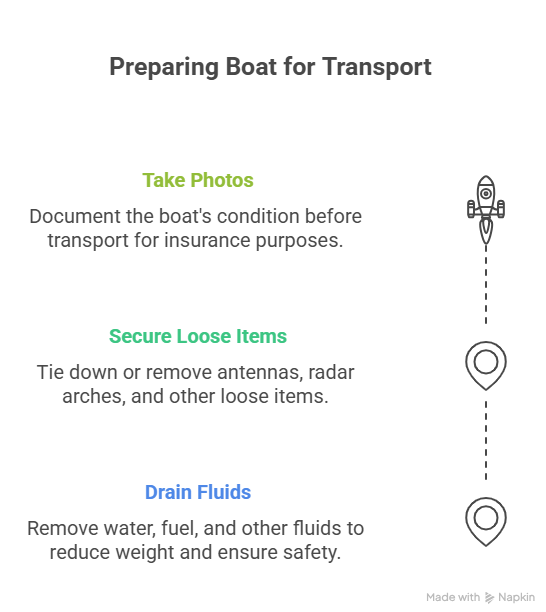
Getting your boat ready is one of the most important parts of moving it safely. You need to secure everything so nothing gets damaged on the way.
This keeps your boat stable while loading, moving, and unloading.
We also suggest that you take photos of your boat before the trip. They help if anything happens during boat transport.
When understanding how to transport a houseboat, loading it onto the trailer or transport platform is an important step. It takes the right equipment and know-how.
Sometimes we need hydraulic lifts or winches, depending on the boat’s size and weight. Once it’s on, we secure it with straps or special supports so it doesn’t move during the trip.
Delays can happen from weather, road changes, or construction while your boat is on the road. We do our best to deliver on time, but it’s better for you to plan for possible delays.
We carefully unload your boat and check its condition and alignment when it arrives. After transport, you should reconnect systems like batteries and fuel, inspect the hull, and make sure all equipment is secure.
It’s also a good idea to schedule a cleaning at the marina to get your boat looking its best.
| Maintenance Area | Tip | Why It Matters |
| Hull Inspection | Look for cracks, blisters, or scratches before and after the move. | Helps stop water leaks and keeps the structure strong. |
| Engine & Propulsion | Check the engine, fuel lines, and propeller once the boat arrives. | Keeps the engine running smoothly and avoids costly repairs. |
| Electrical System | Test the batteries, wiring, and all connections. | Prevents power issues and keeps all systems working. |
| Safety Equipment | Make sure life jackets, fire extinguishers, and navigation lights are ready. | Ensure that safety gear is ready and up to standard. |
| Interior & Fixtures | Secure cabinets, appliances, and furniture before you move the boat. | Stops them from getting damaged. |
| Weatherproofing | Check seals, hatches, and canvas covers for damage. | Protects against water getting in and weather damage. |
| Mooring & Anchoring | Inspect ropes, chains, and fenders to keep your boat safe. | Keeps them ready for safe docking. |
Are you thinking about how to transport a houseboat safely? Set Sail Boat Transport is here! For big or small boat transport, we will help you through everything, from the paperwork to the actual move. Reach out today for a quote, and let's get your boat to its new destination.
[/vc_column_text][/vc_column][/vc_row][vc_row][vc_column][vc_tta_accordion][vc_tta_section title="1. How do people move houseboats?" tab_id="1761943587137-13f70de8-a6d5"][vc_column_text css=""]People usually move their houseboats by using specialized trailers or barge transport. You can get in touch with us to handle professional loading and safe delivery across land or waterways.[/vc_column_text][/vc_tta_section][vc_tta_section title="2. How expensive is it to move a houseboat?" tab_id="1761943587149-0e81f191-4d34"][vc_column_text css=""]Moving your houseboat can cost you $5 to $16 per mile. The price depends on size, weight, route, and extra services like permits, pilot cars, or insurance.[/vc_column_text][/vc_tta_section][vc_tta_section title="3. Should you transport a boat with the motor up or down?" tab_id="1761943702339-047ace76-c6c7"][vc_column_text css=""]You should keep the motor down for stability. Just make sure that it’s not too low since it can come in contact with roads or obstacles during transport and cause damage.[/vc_column_text][/vc_tta_section][vc_tta_section title="4. What are the common houseboat problems?" tab_id="1761943724549-1f15b3a8-783c"][vc_column_text css=""]Common problems include hull leaks, engine trouble, electrical issues, blocked plumbing or sewage, and damage from water exposure.[/vc_column_text][/vc_tta_section][vc_tta_section title="5. How do houseboats get rid of sewage?" tab_id="1761943723384-a5b35538-f0b5"][vc_column_text css=""]Houseboats handle sewage with onboard systems. They either use holding tanks that are emptied at pump-out stations or composting systems for waste.[/vc_column_text][/vc_tta_section][/vc_tta_accordion][/vc_column][/vc_row][vc_row][vc_column][vc_column_text css=""]
Knowing how to transport a houseboat safely means planning carefully, following the rules, and working with a team you can trust.
You need to check size and weight, decide the route, get the boat ready, and inspect it after delivery. We guide you through all these steps, use the right equipment, and make sure your boat gets there in good condition.
Ready to relocate your boat? Contact us today! We will handle the challenging tasks so you can get back to cruising and enjoying.[/vc_column_text][/vc_column][/vc_row]
Towing a boat might seem simple to you, but one wrong move can turn a smooth ride into a stressful mess. So, you are probably thinking, what equipment is required to be on a boat trailer?
The right gear doesn’t just keep you legal. It keeps your boat, your vehicle, and everyone else on the road safe.
Knowing exactly what your trailer needs is really important, no matter if you are a weekend boater or moving your vessel for the first time. It can save you from accidents, fines, or unexpected headaches.
In this guide, we will let you know all the necessary equipment that you should have before you head out.
Boat trailers are a bit different from regular trailers. They carry heavy loads, travel long distances, and often get wet from water or salt. They also face all kinds of weather.
It can cause problems if your trailer is missing gear or has broken equipment. That’s why it’s important to know what equipment is required to be on a boat trailer. Items like brake lights, safety chains, or a trailer hitch are especially important. Without them, even a simple trip can become risky.
Making sure your trailer has all the right equipment and is in good shape doesn’t just keep you legal. It also saves you a lot of mental stress.
Lights are one of the most important safety features on a trailer. If you don’t have them, other drivers won’t know when you are stopping, turning, or backing up.
These let drivers behind you know when you’re slowing down or stopping.
Working signals show other drivers which way you are turning and help prevent accidents.
These make your trailer easier to see, especially at night or in bad weather.
A small but required feature that keeps your trailer legal on the road.
Placed in the right spots, reflectors help other drivers see your trailer even if the lights fail.
Before each trip, check all your lights to make sure they work. Broken or missing lights are one of the most common reasons trailers get pulled over.
Your trailer hitch is the backbone of safe towing. Knowing what equipment is required to be on a boat trailer includes having a hitch that is strong enough for your boat’s weight and properly attached.
Along with the hitch, safety chains are required by law in most states. They act as a backup connection between your vehicle and trailer if the hitch fails.
For the best safety of your boat transport, always cross the chains under the hitch. This creates a cradle that can catch the trailer tongue if it ever drops.
If your trailer is heavy enough to need brakes, it also needs a breakaway system. This system will automatically apply the trailer’s brakes if it ever comes loose from your tow vehicle.
A breakaway system is important for keeping your boat and other drivers safe. Before you drive on the road, test it by pulling the pin. Make sure the brakes engage and work properly.
Carrying extra safety equipment can help you handle emergencies besides the gear required by law. We recommend having these items on your trailer:
It might feel like a lot to carry, but when you are far from help, these items can really make a difference.
| Equipment | Purpose |
| Trailer Hitch | Connects the trailer to your tow vehicle. It needs to be strong enough for your boat’s weight. |
| Safety Chains | Acts as a backup if the hitch fails. Always cross them under the hitch for safety. |
| Brake Lights | Let drivers who are behind you know when you are slowing down or stopping. |
| Turn Signals | Show other drivers which way you are turning. |
| Running Lights & Marker Lights | Help other drivers see your trailer at night or in bad weather. |
| License Plate Lights | Keep your trailer legal by lighting up the plate. |
| Reflectors | Make your trailer visible even if the lights stop working. |
| Breakaway System | Turns on the trailer’s brakes if it ever comes loose from your tow vehicle. |
| Fire Extinguisher | A must-have for handling any fire hazards. |
| Flares/Warning Triangles | Make you visible if you break down on the road. |
| First Aid Kit | Helps you deal with minor injuries while traveling. |
| Vents | Stop moisture from building up and avoid mold or corrosion. |
Yes. Running lights and marker lights make sure your trailer is visible to other drivers. They are useful at night or during bad weather.
Yes. Safety chains are required by law in most states and serve as a necessary backup connection if the hitch fails.
A breakaway system is a safety feature that applies the trailer’s brakes automatically if it disconnects from your tow vehicle.
Yes. Reflectors provide visibility even if your trailer’s lights fail, and they are a legal requirement in most regions.
It’s a good idea to carry a fire extinguisher and a first aid kit even if the law doesn’t always require it. These items help keep you safe on the road.
So, what equipment is required to be on a boat trailer? The basics include lighting systems, safety chains, a strong trailer hitch, reflectors, and if your trailer has brakes, a breakaway system.
On top of that, carrying extra safety gear like a fire extinguisher, flares, and a first aid kit helps you be ready for any situation.
At Set Sail Boat Transport, we know that moving your boat safely is more than just strapping it down. It’s about having the right setup from the start. We are here to make your journey simple and safe, whether you are going across town or across the country.
Connect with us today, and we will make your next boat transport trouble-free.
Did you ever think about towing a trailer, but you weren’t sure if your vehicle could handle it? One of the first things you need to figure out is how much does a small trailer weigh? The weight can change depending on the trailer’s size, build, and what you are hauling.
Knowing this isn’t just about numbers. Actually, it’s about safety and satisfaction. You need to know the trailer weight if you are planning small boat transport, packing camping gear, or moving equipment. It helps you stay within your vehicle’s towing capacity and makes your trip less stressful.
In this guide, we will talk about average trailer weights and explain to you the terms like GVWR and tongue weight. We will also share towing tips and give safety advice so you can hit the road with full confidence.
The weight of a trailer isn’t just a small detail. It affects your vehicle’s performance, safety, and even legal compliance. If the trailer and its load go over your vehicle’s towing capacity, you could damage the engine, brakes, or transmission. It also raises the chances of accidents on the road.
Take a boat trailer as an example. You need to know the trailer’s base weight and its payload capacity, which is the total weight it can carry. Towing becomes smoother when you match these numbers correctly.
So, how much does a small trailer weigh on average? Let’s look at some common trailer types.
Lightweight models can be as little as 500 pounds when empty. Once you add gear, the total weight is usually between 1,000 and 3,000 pounds.
These are made for small to mid-sized boats. They normally weigh between 600 and 1,500 pounds, depending on the size and material.
A small camper weight is usually between 1,200 and 3,000 pounds empty. It can reach 2,500 to 4,000 pounds with camping supplies added.
Small enclosed cargo trailers average around 700 to 1,200 pounds. They are great for moving equipment or furniture.
The important thing is to check both the trailer’s empty weight and the gross vehicle weight rating (GVWR). GVWR tells you the maximum weight the trailer can safely handle. This includes its own weight and the load.
There are a few factors that influence trailer weight:
Aluminum trailers are lighter than steel ones. This makes them easier to tow with smaller vehicles.
Bigger trailers naturally weigh more, even before you load them.
A dual-axle trailer is heavier than a single-axle trailer. But it gives you more stability when carrying heavier loads.
A camper trailer with a kitchen, bathroom, or built-in storage will weigh much more than a simple, basic model.
Do you think towing is tough? Follow these tips to make the whole process safe and easy:
Planning a trip with your boat? We specialize in small boat transport and make it simple. Reach out today and let us handle the towing for you.
Towing comes with its own challenges, even if you are confident behind the wheel. That’s why it’s important to keep these safety tips in mind:
Safe towing doesn’t just protect your cargo. It also keeps you and everyone else safe on the road.
Most small camper trailers weigh between 1,200 and 3,000 pounds when empty. Once you load them with supplies, the weight often goes up to 2,500–4,000 pounds. Always check the GVWR for your specific model to be sure.
You can check your towing capacity in your vehicle’s owner’s manual. It’s also listed on the manufacturer’s website. We advise you to never go over this number when you are hauling.
Tongue weight is the pressure your trailer puts on the hitch of your vehicle. If the tongue weight is too much or too little, the trailer can start to sway, and that makes driving dangerous.
An empty utility trailer might weigh only 500 pounds. But when it’s fully loaded, the weight can climb to 2,500–3,000 pounds or even more, depending on the cargo.
Payload capacity is the amount of weight your trailer can carry. GVWR is the maximum total weight, which includes the trailer itself plus the payload. Make sure you stay under both limits to tow safely.
So, how much does a small trailer weigh? On average, it’s between 500 and 1,500 pounds when empty. Once loaded, the weight can climb to several thousand pounds, depending on the type and purpose.
The key is to know your trailer’s weight and your vehicle’s towing capacity. You must also know the basic safety rules that keep you secure on the road.
At Set Sail Boat Transport, we understand towing inside and out, especially when it comes to boat trailers and small boat hauling.
If you are planning your next trip, let us do all the heavy lifting so you can enjoy the ride. Contact us today, and let’s get started!
Let us answer a practical question that keeps coming up in your mind before you launch your boat into the water this year. How much does boat insurance cost in 2025?
It helps to know the average rates, what reasons shape your premium, and how you can save. These things make a huge difference in protecting your boat.
In 2025, boat insurance is often more affordable than people expect. Still, the cost depends on your boat’s type, size, and how you use it. Let’s go over the details step by step.
The cost of boat insurance can change a lot depending on coverage, boat type, and location. On average, here is what you can expect to pay each year:
For comprehensive coverage, most insurers charge about 1% to 5% of your boat’s value each year. Liability coverage usually costs less and is the minimum requirement in some states.
Understanding the factors affecting boat insurance cost can make it easier to estimate your premium. Let’s look at what insurers usually consider:
The type of boat matters a lot. Bigger boats or yachts with high-horsepower engines usually cost more to insure. A small fishing boat is much cheaper compared to a luxury yacht with multiple engines.
The higher the boat value, the higher the insurance cost. If your boat is expensive, it’s smart to add comprehensive coverage to protect it from theft, fire, or storm damage.
How you use your boat also plays a role. You can expect higher premiums, especially in busy or risky waters, if you are out cruising often. Seasonal boaters can sometimes get lower rates during a layup period when the boat isn’t being used.
Where you keep and use your boat matters. Boats in hurricane-prone areas or regions with higher theft risks cost more to insure. Your cruising area and dock location directly affect your policy.
Adding safety gear can help reduce your boat insurance costs. Things like GPS, bilge alarms, and fire extinguishers can earn you discounts. Taking a boating safety course may also bring your premium down.
Your experience and driving record count for a lot. Experienced boaters with clean records usually pay less. On the other hand, underage operators or those with a poor claims history may face higher premiums.
A history of claims can increase your boat insurance premiums. If you have a clean record with no claims, insurers often reward you with better rates.
It’s important to understand your options when you are choosing boat insurance. Here are the main types of coverage:
This pays for any type of damage or injury you cause to others.
This covers damages if your boat hits another boat or object.
This protects against non-collision risks like theft, vandalism, or natural disasters.
This helps if you are in an accident with someone who doesn’t have enough insurance.
This takes care of medical costs for injuries on your boat, no matter who is at fault.
You don’t always have to pay the highest rates. Here are some simple money-saving tips:
At Set Sail Boat Transport, we suggest checking your insurance coverage when arranging small boat transport or yacht transport services. The right coverage gives you satisfaction during transport.
Boat insurance isn’t just a legal formality. It’s your safety net on the water. Accidents can happen anytime, from collisions to storm damage. Without insurance, the cost of repairs or liability claims can be a lot to handle.
When you understand how much does boat insurance cost and choose coverage that fits your needs, you protect your investment and yourself.
Premiums for small boats usually range from $200 to $500 per year. The exact cost depends on coverage, location, and safety features.
Yes, having a clean driving record or boating safety record can help lower your rates. But past accidents or claims may increase costs.
Absolutely. If you complete a recognized boating safety course, you can easily qualify for discounts on your boat insurance premiums.
Not always. Liability coverage may be enough for small boats. But larger or high-value boats often need comprehensive coverage to protect against theft, storms, and vandalism.
Yes. The type of boat, its size, horsepower, and how you use it all affect boat insurance costs. Yachts and high-powered boats usually have higher premiums than smaller, less powerful vessels.
Understanding how much does boat insurance cost in 2025 helps you plan your boating expenses with ease. When you choose the right coverage and use smart money-saving tips, you can protect your vessel without overspending.
And if you ever need insurance advice, small boat transport, or yacht transport services, we’re here for you. Contact Set Sail Boat Transport today for reliable guidance and safe transport solutions.
Do you feel that launching your boat is a stressful task? If yes, then you’re not alone. Many new boaters wonder how to launch a boat from a trailer without making mistakes or damaging their boat. The process can feel overwhelming at first, but with the right knowledge and preparation, it becomes simple. By learning the proper steps and following proven safety tips, you can launch with confidence every time.
In this blog, we’ll share some helpful tips to ensure a safe and smooth boat launch.
Preparation saves time and prevents stress once you arrive. If you’re still learning how to launch a boat from a trailer, start by organizing everything in advance. Park in the staging area instead of blocking the boat ramp. Load your gear, food, and safety equipment into the boat. Check that your drain plug is secured tightly. Remove the transom straps, but leave the winch strap attached until the boat is in the water.
Before backing down, line up your boat trailer with the center of the ramp. Use your mirrors and make slow adjustments to stay straight. If needed, ask a partner to guide you. Once in position, stop fully and engage the parking brake. Avoid sharp turns that could cause the trailer to jackknife. Keeping steady control helps you back down smoothly.
Reverse the trailer slowly until the water reaches about two-thirds of the trailer’s tire height. This depth usually allows the boat to float slightly but still be supported. Avoid submerging your tow vehicle’s rear tires, as that risks slipping. If the trailer is too shallow, the boat may not float off. If it’s too deep, the boat could drift suddenly. Adjust carefully until the balance feels right.
Once the trailer is positioned, unhook the safety chain but keep the winch strap connected. Have one person inside the boat and another outside controlling the strap. Slowly release tension so the boat eases into the water. Our boat trailer services will prevent it from sliding too fast or bumping the trailer. This way, you can keep your boat and trailer safe from damage.
Confidence comes with practice. If you want to get better at handling your boat, start by learning how to launch a boat from a trailer during quiet times. Choose early mornings or weekdays when the ramps are less crowded. It allows you to practice reversing, steering, and handling without pressure. A few practice sessions make busy weekends much less stressful.
Launching is faster and safer with two people. One can guide the tow vehicle, while the other handles the boat. Use simple hand signals to communicate instead of shouting. Clear signals can help you reduce confusion and keep both the boat and trailer safe from damage.
Many scratches happen when launches are rushed. Keep the boat straight and centered on the trailer. Move slowly and check for rocks or slick areas near the ramp. Rushing often leads to dents or trailer damage. Our boat transport services follow a careful approach to keep everything in good condition.
Before heading out, double-check essential safety gear. Life jackets, docking ropes, and a fire extinguisher should all be within reach. Verify that your drain plug is tight and fuel lines are ready. These small checks prevent problems once you’re on the water.
After launching, give your tow vehicle’s brakes time to dry by driving slowly. Rinse off any saltwater or mud from the trailer to prevent corrosion. Regularly inspect lights, bearings, and tires. You can ensure a safe launch whenever you keep your trailer in good condition.
Not every launch is simple. Larger boats, tricky ramps, or limited experience can make the process stressful. That’s where Set Sail Boat Transport can lend you a hand. We help boaters with towing, handling, and launching support. With expert guidance, you can relax and focus on enjoying the water while we take care of the hard part.
Learning how to launch a boat from a trailer safely is a skill that every boater should have. With careful preparation, you can avoid stress and enjoy smoother launches every trip. We make the process easier and safer.
Many people overlook this, but knowing how to change wheel bearings on a boat trailer can save you from breakdowns on the road. Your trailer’s wheel bearings are essential every time you tow. Keep in mind that if they fail, your boat may never reach the water. Replacing them is not too complicated when you understand the steps and prioritize safety.
Replacing boat trailer wheel bearings requires proper care and time, but you can do it easily by using the right tools. You can follow these steps to replace boat trailer bearings and ensure a smooth towing performance.
The first step you’ll take is to park the trailer on level ground and secure it. Use wheel chocks to stop movement. Moreover, make sure the trailer is steady before you begin. Safety at this stage can help you prevent accidents later.
Now, you’ll have to loosen the lug nuts a little bit before you jack up the trailer. You can also use a jack to lift it until the wheel clears the ground. Also, remove the nuts and take off the wheel completely. This is because it will expose the hub and make bearing replacement possible.
You can use a flat tool to remove the dust cap from the hub. You will find a cotter pin inside to hold the castle nut in place. Straighten the pin and carefully pull it out with pliers. Then unscrew the nut and washer.
After you remove the nut, pull the hub toward you. In most cases, the outer bearing comes out first, so put it aside to prevent it from getting dirty. After that, remove the hub from the spindle. You will see the inner bearing and grease seal.
Flip the hub so you can reach its backside. Then, use a seal puller or even a screwdriver to remove the grease seal carefully. Once that’s out and remove the inner bearing. When understanding how to change wheel bearings on a boat trailer, ensure that you clean out all the old grease with rags and some solvent. This step can help you see any cracks or damage easily.
You’ll now have to look for cracks or heat marks on the spindle. If you see severe wear, consult a professional for trailer wheel bearing replacement. If everything looks okay, you can continue with the job.
Now, take the new bearings from your bearing kit and apply high-quality marine grease. Make sure to press the grease into each bearing until it comes out the other side. Proper packing will help you ensure long-lasting performance.
You’ll now have to place the inner bearing into the hub. Position the new grease seal over it and tap it gently into place. Make sure it sits flush. This step keeps the water and dirt out of your bearings. With our boat transport services, we can guide you so that you can understand the entire process and ensure that everything is perfect.
Slide the hub back onto the spindle. Insert the outer bearing, followed by the washer and castle nut. Tighten the nut until snug, then back it off slightly. The hub should spin freely without excess play.
Now, you’ll have to insert the new cotter pin through the castle nut. Carefully bend it to hold it in place. After that, tap the dust cap back over the hub to protect the assembly. Make sure to follow this step properly when you’re learning how to change wheel bearings on a boat trailer.
Lift your wheel onto the studs and twist on the lug nuts by hand. After you have lowered your trailer, pick up your wrench. Then, tighten the nuts in a crisscross pattern, going from one side to the opposite. That way, your wheel will lock into place evenly.
After you change the wheel bearings, you’ll need to keep your trailer in good condition for longer trips. Simply follow these practical safety tips:
Always keep a bearing kit in your vehicle. If the bearing fails on the road, you can make a quick wheel bearing repair instead of being stranded.
Always remember to check the condition of your tires, lights, and trailer wheel bearing before towing. Preparing the trailer properly helps prevent roadside emergencies and protects your boat.
Yes, you can carry out bearing replacement yourself. But sometimes expert help is necessary. Set Sail Boat Transport not only moves boats safely but also understands the importance of keeping trailers in top condition. You can rely on our boat trailer transport services for professional care whenever you need it.
Changing your trailer bearings takes effort, but it’s worth the peace of mind on the road. By learning how to change wheel bearings on a boat trailer, you protect your boat and avoid roadside breakdowns.
When you need professional transport services with the same level of expertise, contact Set Sail Boat Transport is always ready to assist you. With us, your boat and trailer will stay safe on every journey.
Many boat owners face the challenge of unloading their vessel without harm. Learning how to lift a boat off a trailer safely is vital for maintenance, storage, or repairs. Doing this the wrong way can lead to costly damage, personal injury, or equipment issues.
With the right tools and techniques, you can handle the process effortlessly. We have explained proven methods and expert tips that can make boat lifting safer and easier for you.
If you’re thinking about how to lift a boat off a trailer, unloading your boat from a trailer requires patience and preparation. Having the right knowledge can help you protect both your boat and yourself. Follow these steps for safe handling:
Choose a level, solid surface to work on. Avoid uneven ground that can shift under weight. Have tools ready, such as a hydraulic jack, wood blocks, and boat stands. Keep a safety chain nearby to prevent movement. Wear gloves and closed shoes for safety.
Before lifting, check that the boat and trailer are stable. Chock the trailer wheels to prevent rolling. Disconnect electrical connections and ensure the winch strap is free. Double-check that nothing connects the boat to the trailer. Our boat trailer transport services can help you keep your hands clear of pinch points during setup.
Place a strong jack or blocks under the transom area. Slowly lift the stern a few inches. Slide supportive blocks or a stand beneath. Never raise the boat too quickly. Steady lifting avoids damage to the hull. Check the balance after every lift.
Once the stern is secure, move to the bow. Position the hydraulic jack under the keel and lift gently. Insert blocks or stands as support. Always double-check the balance before proceeding further. If the boat shifts, lower it slightly and adjust.
Switch between stern and bow to raise the boat evenly. Add blocks or boat stands as needed. Keep adjusting until the ship clears the trailer rollers or bunks. Lifting a boat evenly prevents pressure points and stress cracks.
Once the boat is fully supported, pull the trailer forward slowly. Watch for any weight shift. If the boat wobbles, stop immediately and add support. A steady process prevents stress cracks and other structural damage. Move the trailer out slowly until it clears completely.
After the trailer is out, confirm the boat rests evenly on blocks or stands. Push gently on the hull to check stability. Only move on when you feel confident that it is secure. Never leave tools or blocks loose under the hull.
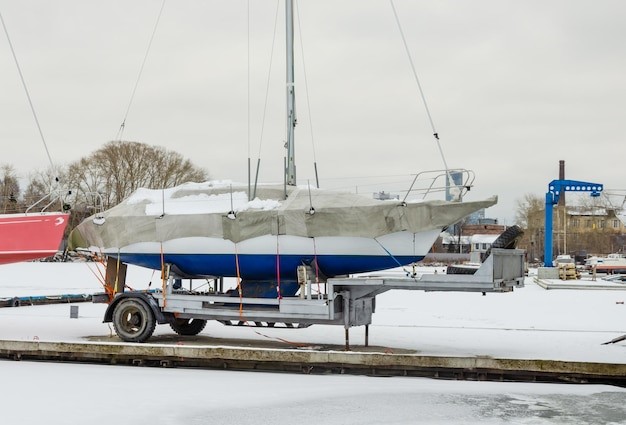
Some boats are too large or heavy for personal lifting. If you lack tools or experience, call experts. Set Sail Boat Transport uses proven methods and specialized equipment, even if you need small boat transport services. We will help you minimize the risk of costly mistakes, along with time and effort. We handle lifting, transport, and secure placement with care, giving you complete peace of mind.
Yes, but only small boats. Larger vessels often require multiple people or professionals. Using a lift boat trailer or strong jacks improves safety and balance while unloading.
Always place the hull on blocks and boat stands. Make sure most of the weight rests on the keel and transom. Supporting side areas without keel support can cause cracks over time.
Yes. A hydraulic jack, solid blocks, and stands are essential. Using the right boat trailer setup and lifting tools reduces risks. Without these, both the hull and trailer may face serious damage.
Learning how to lift a boat off a trailer the safe way keeps your vessel protected and ready for use. From proper preparation to steady lifting, each step matters for safety. The right tools, techniques, and patience prevent damage and ensure stability. If your boat is large or the process feels risky, leave it to us.
Contact Set Sail Boat Transport, so we can provide expert help to make boat lifting and transport stress-free. Reach out today and let us handle the heavy work for you.
Taking your boat out on the water is exciting, but it also comes with risks. Storms, accidents, or unexpected damage can happen when you least expect them. That’s why many owners ask, “Do you need boat insurance?” While some people view it as an extra cost, the reality is that insurance can protect you from financial loss. Beyond legal requirements, it gives you security knowing that you and your boat are covered.
Before setting sail, it’s important to understand why insurance matters and what it can do for you as a boat owner.
Many boat owners assume that their homeowners or auto insurance covers boats. In reality, most standard policies do not. This is where boat insurance becomes critical. Without it, you could face expensive repairs, medical bills, or even lawsuits.
When you take your boat out, there are multiple risks. A collision with another vessel, damage from storms, or injuries to passengers can all lead to high costs. Even if you are careful, other boaters may not be. If an uninsured boater crashes into your vessel, you might end up paying out of pocket unless you are covered.
Another key reason insurance matters is liability. You could be financially responsible if someone unintentionally gets injured or hurt on your boat or if your boat damages property. Liability coverage helps protect you from these situations.
Insurance is not just about meeting boat insurance requirements set by marinas or lenders. It’s about peace of mind. You know that if something goes wrong, you are prepared.

You might be wondering, do you need boat insurance in all situations? The answer depends on where you live, your lender, and where you plan to dock or use your boat.
Some states have laws that require insurance for certain boats when you invest in boat transportation services. For example, if you own a personal watercraft like a Jet Ski, some states mandate coverage. Similarly, marinas often ask for proof of insurance before renting you a slip. This ensures they are not held liable for accidents involving your boat.
If you financed your boat, most lenders will also require insurance until the loan is paid. They want to make sure their investment is secure. Without proof of coverage, you might not be able to keep your loan in good standing.
Even if you are not legally required, you should still consider it. Accidents are unpredictable. Without coverage, a single mishap could drain your savings. Imagine the financial stress if your boat sank or if someone filed a claim against you.
Remember, requirements vary, so always check local rules and your marina’s policies. Having insurance in place means you can enjoy the water without worry. It is not just about following rules, but about long-term protection.
One of the biggest concerns for owners is knowing what type of coverage is available. Boat insurance policies can vary, but most include essential protections.
Physical Damage Coverage
First, coverage for physical damage to your boat is common. This includes damage from storms, theft, fire, or accidents on the water. It helps pay for repairs or even replacement if the damage is severe.
Liability Coverage
Second, liability coverage is crucial. It covers claims if your boat causes bodily injury liability or property damage. This means if a passenger or another boater gets hurt, your insurance can handle medical bills and legal fees.
Uninsured or Underinsured Boater Protection
There is also coverage for uninsured or underinsured boaters. If another boater without insurance hits you, this coverage protects you from paying the costs yourself.
Additional Coverage Options
Many policies also include additional coverage options. This can include towing services, coverage for equipment like GPS or fishing gear, or even environmental cleanup in case of a fuel spill.
It’s important to understand the type of boat insurance that fits your lifestyle. Whether you need broad liability protection or just want coverage for storm damage, your insurer can guide you.
If you’re still thinking about whether you need boat insurance, remember that without boat insurance, the financial risks are huge. Repairs, replacements, or lawsuits can cost thousands of dollars.
For example, if your boat collides with another vessel and damages both, you are responsible for the repair bills. If passengers get hurt, medical costs pile up quickly. Without insurance, you could face debt or even lose your boat.
With the right policy, you know you are protecting your boat and your wallet. Insurance steps in to handle repair bills, medical payments, and legal fees. This means you avoid draining your savings.
Another advantage is flexibility. You can choose the liability coverage and add extras to suit your boating style. Whether you sail in open waters or dock at marinas, there’s a plan that fits.
At Set Sail Boat Transport, we see how insurance helps boat owners stay confident and worry-free. You deserve to enjoy the water knowing your boat and finances are safe.
Most marinas and lenders ask for proof of insurance before you dock or finance a boat. These boat insurance requirements protect them from liability in case of accidents. Always check your local rules.
Yes, many policies cover the cost of extra items like navigation tools or fishing gear. You can also add additional coverage for higher-value equipment.
Yes, many plans include uninsured or underinsured protection. This ensures you are not stuck paying if another boater without coverage causes damage or injury.
Are you still wondering, “Do you need boat insurance?” The short answer is yes if you want peace of mind on the water. From accidents to storm damage, insurance ensures you are not left with overwhelming costs. It also keeps you compliant with lenders, marinas, and state rules.
At Set Sail Boat Transport, we care about keeping your boating experience safe and stress-free. Protect your boat, your wallet, and your freedom to enjoy every trip. Get insured today and sail without worry.
Moving a large boat is not something you can do overnight. It requires planning, expert handling, and the right equipment to ensure your vessel arrives safely. If you’ve been searching for how to transport a large boat without stress, you’ll find that preparation makes all the difference.
From choosing the best method for shipping to working with a professional boat transport company, every step matters.
In this guide, we’ll walk you through strategies, practical tips, and the equipment that guarantees a smooth and secure move for your valuable boat.
Do not mistake to think that transporting a boat is as simple as driving it to a new location. Large vessels require planning, specialized tools, and skilled handling. Below is a step-by-step process on how to transport a large boat without stress.
Start by measuring your boat’s height, width, and length. Oversize boats require special permits, and an accurate measurement prevents problems later. Inspect your boat thoroughly for cracks, loose fittings, or parts that could cause issues during loading and unloading. Take photos for records in case of damage during transport.
There are several methods available for shipping a boat. For cross-country moves, a professional boat trailer or hydraulic trailer works best. For international boat shipping, yacht transport services are a great option when you’re unequipped or moving your yacht for the first time. Since each method has its pros and cons, these service providers can help you choose an ideal option depending on your budget and distance.
Hiring a professional boat transport company saves time and reduces stress. Experts know how to secure oversize boats, handle paperwork, and follow road or port regulations. At Set Sail Boat Transport, we provide complete boat transportation services with a focus on safety and efficiency. Our team can also help you clear your mind if you’re unable to decide how to transport a large boat.
Drain all fuel and water tanks. Remove electronics, valuables, and loose items. If needed, secure a custom cradle to keep the vessel steady during the move. These steps reduce risks while transporting a boat.
Loading and unloading a large vessel requires careful handling and specialized equipment. Hydraulic lifts, cranes, or professional trailers help secure the boat properly. Always let trained experts manage this part to avoid costly mistakes.
Accidents can happen, even with the best team. Insurance is vital to cover any damage during transport. Speak with your boat shipping company to confirm the coverage before the move begins.
During long-distance or international moves, ask for tracking updates. When you choose us, our team will keep you informed every step of the way. It gives peace of mind knowing your vessel is safe.
Here's a Pro Tip: Plan your transport during off-season months if possible. It may reduce costs while still giving you top-quality service.
🚢 Transport Your Large Boat Safely
Request your free quote today and experience expert handling for your oversized vessel — hassle-free and secure!
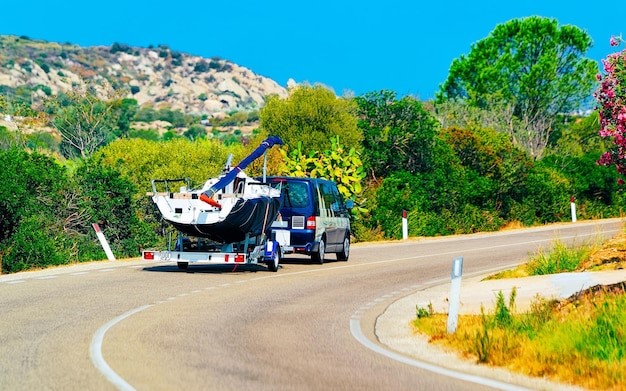
The right equipment makes all the difference when transporting a boat. Using professional-grade tools and support systems ensures safety, stability, and efficiency. Here are some of the most important pieces of equipment you should know about.
For shipping a boat across the country, a hydraulic trailer is one of the safest options. It adjusts to fit different hull shapes and sizes, making it ideal for oversize boats. Standard boat trailers also work for smaller or mid-sized vessels, but a professional operator should always handle them.
A custom cradle provides a secure fit for the hull during movement. It prevents shifting and reduces stress on the boat’s structure. This equipment is especially helpful for long-distance or international boat shipping, where stability is key.
Heavy-duty cranes and hydraulic lifts are often used for loading and unloading large boats. These machines make the process smoother and safer. They prevent unnecessary strain on the vessel and reduce risks during handling.
Protective wrapping shields your boat from dust, debris, and weather conditions during transport. High-quality covers also keep sensitive areas safe from scratches or damage. Even a simple cover can make a big difference in preserving the boat’s condition.
The best equipment is only as effective as the team using it. A reliable boat shipping company provides not only the tools but also the expertise. Set Sail Boat Transport combines professional equipment with skilled handling to make transporting a boat simple and safe.
The safest option is using a yacht transport ship with proper support, like a custom cradle. This method ensures stability, reduces risks, and works best for international boat shipping.
Costs depend on the boat’s size, distance, and equipment needed. Choosing the right boat transport company can help reduce costs by offering tailored boat transportation services.
Remove valuables, drain fluids, and secure loose parts. Ask your provider about protective wrapping and confirm insurance coverage to avoid damage during transport.
Learning how to transport a large boat doesn’t have to be stressful. With the right method, expert support, and reliable equipment, you can move your vessel safely across any distance. From cross-country moves to international boat shipping, planning is the key to success.
At Set Sail Boat Transport, we provide trusted boat transportation services that put safety and peace of mind first. Contact us today and let us handle the transit process so you can focus on enjoying your time on the water.