Close
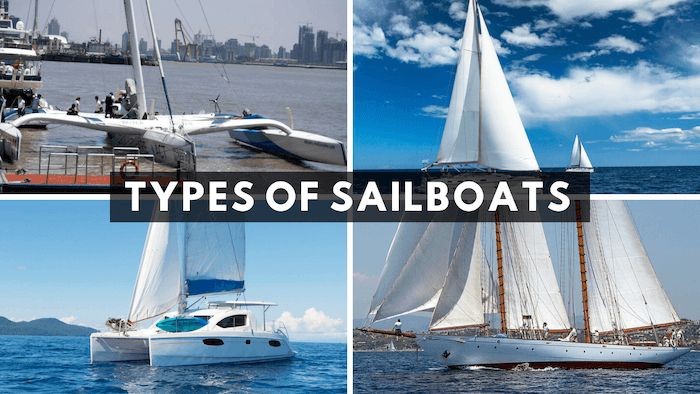
When you start exploring the sailing world, understanding the types of sailboats is crucial to finding the vessel that matches your lifestyle, skill level, and intended waters. The choice you make affects everything from handling and comfort to maintenance and transport logistics.
Are you planning weekend day sails, long-distance cruising, or adventurous offshore passages? Each sailboat type offers special characteristics that influence performance and practicality.
While you focus on the wind in your sails and the horizon ahead, Set Sail Boat Transport focuses on keeping your boat safe, whether in storage, on the water, or during professional sailboat transport.
By examining rigging, hull types, and multihull designs, you can make an accurate choice that balances fun, performance, and long-term ownership.
Sailboats vary widely in rigging, hull configuration, and onboard comfort. Each type has advantages and trade-offs depending on how you intend to sail. Knowing these nuances helps you match a boat to your personal sailing goals.
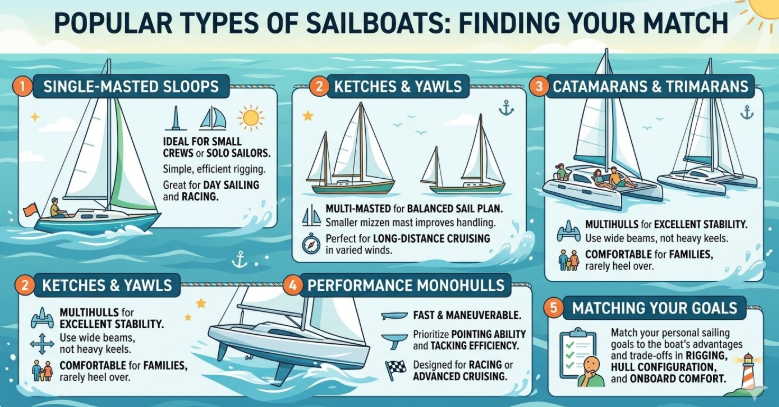
The sloop is perhaps the most familiar sailboat type, featuring a single mast and typically two sails: a mainsail and a headsail (jib or genoa). Its simplicity makes it ideal for small crews or solo sailors.
Ketches and yawls are multi-masted boats with a main mast and a smaller mizzen mast aft. This configuration allows you to balance the sail plan and improve handling in heavier winds.
Multihulls, such as catamarans and trimarans, are among the most popular types of sailboats that use wide beams instead of heavy keels for stability.
They rarely heel over, offering spacious interiors and comfortable sailing for families or casual cruisers.
Fin-keel monohulls are designed for speed and maneuverability. These boats are perfect for sailors who prioritize pointing ability and tacking efficiency over interior space.
The number of masts and sail-plan complexity directly affect maintenance and handling. Multi-masted vessels like ketches and schooners represent some of the more complex types of sailboats, offering versatility in sail area but requiring careful rigging inspection and upkeep.
When you engage professional sailboat transporters, these complexities impact how we secure masts, booms, and standing rigging for overland moves. Larger or multi-masted boats often require de-rigging, specialized trailers, and careful route planning to ensure safe delivery.
Hull design determines stability, speed, and comfort. Lightweight, flat-bottomed hulls accelerate quickly and excel in racing, while heavier V-shaped hulls provide smoother rides in choppy waters.
By analyzing ballast ratios, displacement-to-waterline ratios, and draft, you can select a boat that aligns with your sailing objectives. This technical understanding is a key component of our anchor and hull preparation advice for professional transport.
Selecting your vessel isn’t just about performance. Logistics is equally important. Deep-keel monohulls, multihulls, and taller rigs require specialized handling for transport. Overland sailboat transport ensures that your hull, rigging, and electronics remain protected during relocation.
We recommend professional boat transport service whenever you move a wide-beam catamaran, a high-mast ketch, or a performance monohull. Proper preparation prevents damage to the hull, deck hardware, and masts while maintaining your vessel’s resale value.
Choosing among the types of sailboats requires honest reflection on how you plan to use the boat. Do you value speed and performance or comfort and space? Are you exploring inland lakes or planning offshore passages?
Understanding your priorities allows you to select the sailboat that balances adventure with practicality. With the right vessel, your time on the water becomes safer, more enjoyable, and tailored to your family’s needs.
At Set Sail Boat Transport, we make sailboat relocation seamless. Whether you choose a classic monohull, a modern performance yacht, or a multihull for family comfort, our team ensures your vessel arrives safely and ready for immediate use.
Start your summer adventure the right way! Get a custom transport quote today and leave the hard work to our team.