Close

[vc_row][vc_column][vc_column_text css=""]Finding the right yacht transport company is more than transporting it from one place to another. You want a trusted partner who handles your asset with care and professionalism. The process requires precision, expertise, and a lot of paperwork. That’s where you see a clear difference between the amateur and professional yacht transport companies.
We have spent over eight years in the boat transport industry and have catered to numerous clients. And to help you and other boat owners with our experience, here is the guide that explains how to choose the right nationwide yacht transport company. Let’s dive into it!
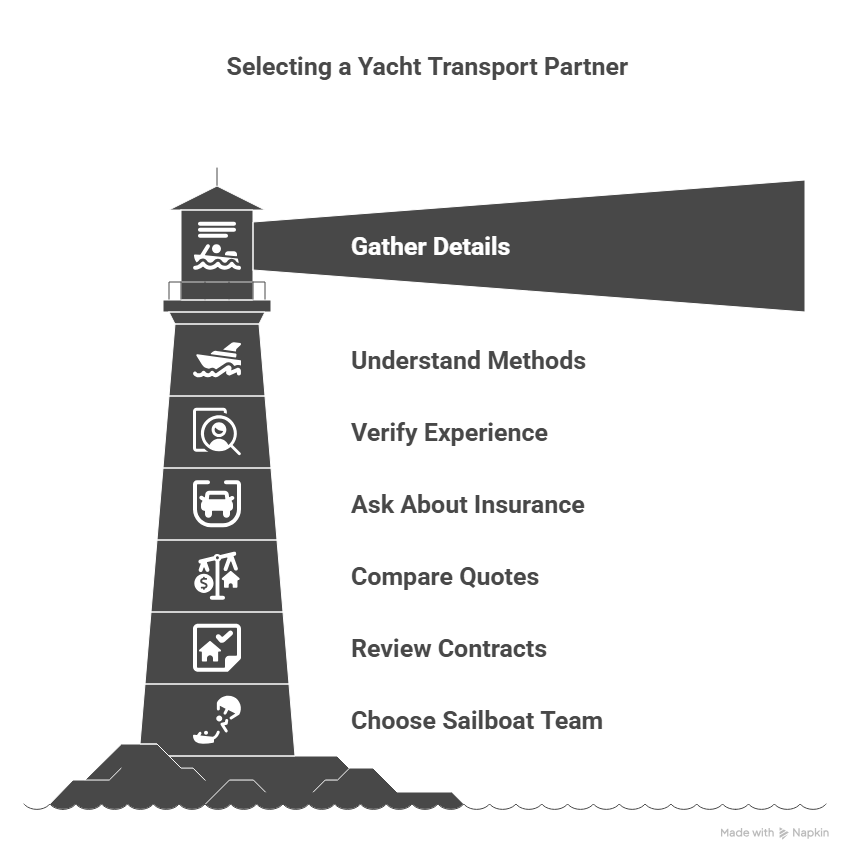
To get accurate quotes and leave no space for end-of-moment surprises, have your yacht’s full specs, like make, model, overall length, height, beam, and weight.
These details allow a company to determine the type of trailer, permits, and escorts required for safe transport, while quoting you an accurate estimate. The more precise information you provide, the more reliable your quote will be.
Besides, note that oversized or overweight permits are issued by individual states, not the federal government. So, cross-country routes often need multiple state permits and carefully planned windows.
It is crucial to understand because different types of vessels require different transport vehicles. For example, a 40-foot sailboat cannot fit in a vehicle that is meant to transport a 30-foot center console. Depending on your vessel’s structure and route, your carrier might recommend:
Further, it often makes more sense to use a small boat transport service which is ideal to handle vessels that don’t require special permits or escorts, and becomes a practical solution for shorter routes or seasonal relocations.
The right yacht transport company must know about the unseen challenges that can occur on the route. Things like weather delays, construction detours, or last-minute permit changes are the common ones that off balance the expectations. Therefore, when reviewing potential companies, look for:
While moving big yachts, insurance is a must. Even with the best equipment and planning, unexpected situations can happen. Therefore, to remain safe, request a copy of the carrier’s insurance certificate and call the listed insurance company to verify active coverage.
Ensure the policy includes cargo insurance covering your yacht’s full value, liability insurance, and workers’ compensation for their crew.
Also, remember that transport companies don’t provide yacht or sailboat cleaning. When moving your boat over a longer distance, it often picks up dirt, for which you can look for a marina service that handles cleaning. And for a smooth process, we always recommend scheduling a cleaning once it’s safely unloaded.
When comparing quotes, it is better if you look at the bigger picture instead of looking for the cheapest one. What matters here is the list of facilities you are getting for the transport. An honest quote from a professional yacht transport service should detail:
A company that explains these costs upfront is one that won’t surprise you later.
Before signing with a yacht transport company, go through the contract line by line. Confirm that your vessel details are correct, including pickup time, delivery date, and discussed insurance coverage.
Weather or routing issues can cause unavoidable delays, but a professional transport partner communicates those changes early. We always stay in touch with our clients throughout the process and coordinate with marinas for real-time status updates.
Sailboats require special preparation, like masts, rigging, and keels, which adds to complexity. A reliable sailboat transport service will help coordinate de-rigging and reassembly with your marina. And remember, when it comes to delicate structures like rigging, experience makes all the difference.
[/vc_column_text][/vc_column][/vc_row][vc_row][vc_column][vc_tta_accordion][vc_tta_section title="1. What is the 24m rule for yachts?" tab_id="1761943587137-13f70de8-a6d5"][vc_column_text css=""]The 24-meter rule considers any vessel that is 24 meters (around 78.7 feet) or above as a yacht in regulatory terms. This threshold becomes crucial when determining inspection standards, crew requirements, and insurance needs.[/vc_column_text][/vc_tta_section][vc_tta_section title="2. Why are shoes not allowed on yachts?" tab_id="1761943587149-0e81f191-4d34"][vc_column_text css=""]Shoes are usually prohibited to protect delicate teak decks and interiors because dirt, grit, or small stones caught in soles and scratch expensive wood finishes. Therefore, going barefoot (or wearing soft deck shoes) is simply yacht etiquette.[/vc_column_text][/vc_tta_section][vc_tta_section title="3. Can a 30-foot yacht cross the Atlantic?" tab_id="1761943702339-047ace76-c6c7"][vc_column_text css=""]Yes, a 30-foot yacht can cross the Atlantic, but it takes good preparation and requires experience. You will need adequate fuel, provisions, and equipment. Meanwhile, many owners prefer larger vessels for comfort and storage during long crossings.[/vc_column_text][/vc_tta_section][vc_tta_section title="4. How much does it cost to transport a yacht across the U.S.?" tab_id="1761943724549-1f15b3a8-783c"][vc_column_text css=""]The transport cost is typically between $5.00 and $16.00 per mile, depending on weather, size, distance, insurance, and more. Oversized loads require pilot cars or escorts that can increase the total.[/vc_column_text][/vc_tta_section][/vc_tta_accordion][/vc_column][/vc_row][vc_row][vc_column][vc_column_text css=""]
Choosing a yacht transport company is trusting a professional to handle something that carries your memories and emotions, not just market value. After nearly a decade in this business, we have learned that clear communication and transparent pricing build that trust better than anything else.
Nobody has control over weather or sudden road closures, but diligence, professionalism, and care every step of the way is what we commit to and deliver to our clients. So, if you are planning your yacht's next transport, Set Sail Boat Transport is here to help you do it right. Visit us to learn more about safe, reliable transportation services across the U.S. to get started.[/vc_column_text][/vc_column][/vc_row]