Close

[vc_row][vc_column][vc_column_text css=""]We know that enjoying a weekend on the water is full of fun, but towing a boat safely is where the real adventure begins. Understanding the essentials of towing can save you time, money, and avoid risks of damage.
Whether you are a professional or doing first time, it is necessary to be prepared with all the required things to make towing safe. And to make things easy for you, here is our guide explaining safety tips, along with common mistakes to avoid. Let's get into it!
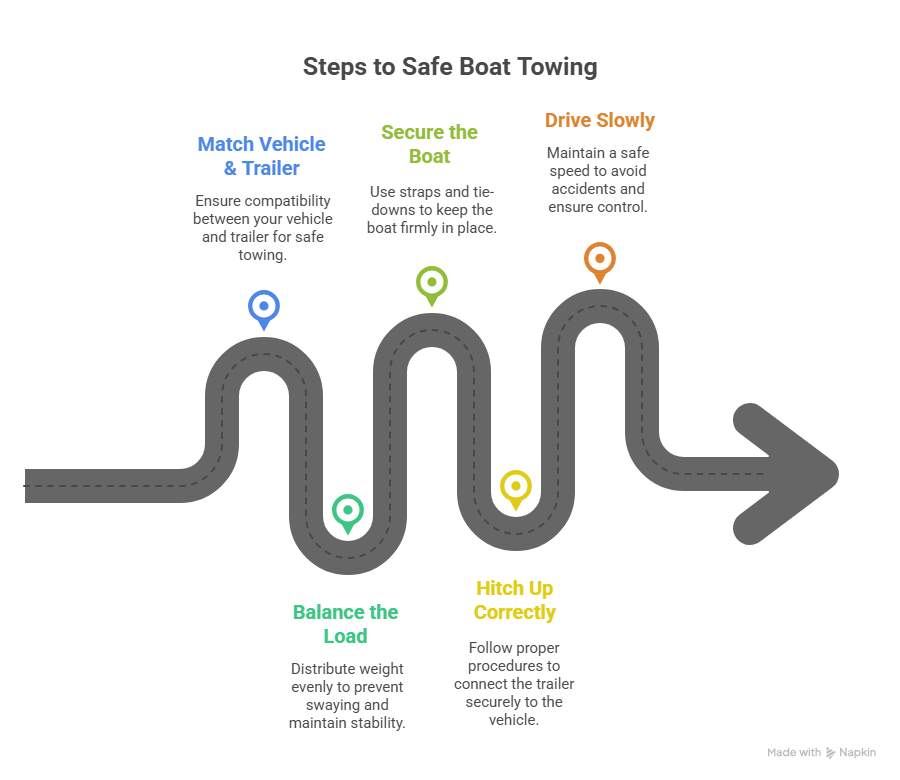
The very first thing before doing anything is checking your vehicle, your trailer, and the boat itself before giving ignition.
It is necessary that your vehicle is rated for the gross trailer weight because if you overload the vehicle, your engine power will strain and also bring controlling issues on highways.
Also, there is an 80% rule followed by many professionals, which states that towing a boat not more than 80% of your vehicle’s maximum towing limit is a best practice because it brings stability while driving and also reduces damaging risk.
To achieve stability in towing, make 5-10% of the total trailer weight rest on the tongue. Otherwise, when the back part is weighted more, your trailer can start swaying. Meanwhile, too much on the front can cause your rear tires to drag.
Make use of ratchet straps to connect the hull directly to the trailer frame. If you have any gears, secure them inside the boat so nothing shifts while driving. It looks small step, but essential because even a few inches of movement while towing a boat can make your trailer swing and making it difficult to drive and control.
Hooking up a trailer requires you to follow a proper method, including:
Understand that towing a boat adds weight and changes the driving pattern. To be safe, here are some precautions:
Even before your trailer hits the ramp, consider the information that the U.S. Coast Guard released last year about 3,800 boating incidents. Numbers like that remind us why towing a boat safely is more than a convenience.
Make a habit of stopping every 100 miles to check that the straps remain tight, the lights are working properly, and the tires haven’t overheated. It helps prevent surprises like a loose transom strap or worn bearings before they become major problems.
Moreover, if you are planning a cross-country move or seasonal relocation, professional boat trailer service can be a good option to consider to ensure your boat travels safely under full insurance coverage.
Towing a boat is considered easy when it is small in size. However, even with lightweight towing, proper tie-downs and balance cannot be ignored. So, keep a check on the outboard motor, drain plug, and all required registration and permits.
Besides, for regional moves, you can consider a small boat transport service that offers flexible, cost-efficient options and saves your time, fuel, and headaches.
When it comes to transporting a yacht or large vessel, permits and pilot cars become necessary. Because of that, costs can vary typically between $5.00 and $16.00 per mile, depending on size, route complexity, and required escorts.
Meanwhile, if you are moving a larger craft, relying on a professional yacht transport service is a good idea because it ensures compliance with state and federal regulations and offers full-scale logistics management.
Weather delays, permit hold-ups, and road closures are not in anyone's control. However, even if such a situation occurs, a good provider keeps you informed and adjusts routes as needed for maintaining both safety and transparency.
Besides, it is important to note that while towing a boat, it often gets dusty or dirty during long hauls, and since transportation companies don’t provide cleaning services, schedule a wash or detailing at the receiving marina after delivery to make your arrival smoother.
Here is what new boat owners often do when attempting their first haul:
[/vc_column_text][/vc_column][/vc_row][vc_row][vc_column][vc_tta_accordion][vc_tta_section title="1. What is the 80% rule when towing?" tab_id="1761943587137-13f70de8-a6d5"][vc_column_text css=""]The 80% rule means utilizing 80% of the vehicle’s rated capacity because it gives you a safety buffer to handle slopes and wind pressure without straining your engine or transmission.[/vc_column_text][/vc_tta_section][vc_tta_section title="2. What is the 110/20 rule for towing?" tab_id="1761943587149-0e81f191-4d34"][vc_column_text css=""]The rule states that the first 110 inches of wheelbase can support about 20 feet of trailer. Meanwhile, every extra four inches adds roughly one more foot of trailer length for balanced handling.[/vc_column_text][/vc_tta_section][vc_tta_section title="3. What speed limits apply when towing?" tab_id="1761943702339-047ace76-c6c7"][vc_column_text css=""]It varies by area. 30 mph in street-lit regions, 50 on single carriageways, and up to 60 on dual carriageways and motorways. However, we always recommend verifying local regulations before you travel.[/vc_column_text][/vc_tta_section][vc_tta_section title="4. Should I insure my boat during transport?" tab_id="1761943724549-1f15b3a8-783c"][vc_column_text css=""]Yes, many transport companies include basic coverage, and also offer a cargo insurance add-on for full protection..[/vc_column_text][/vc_tta_section][/vc_tta_accordion][/vc_column][/vc_row][vc_row][vc_column][vc_column_text css=""]
It is all about preparation, patience, and using the right equipment when it comes to towing a boat safely. Whether you are handling a small trailer or moving a large yacht, taking time to plan the trip is essential.
And when the move requires experienced hands, Set Sail Boat Transport is here to help. With more than eight years of experience, we focus on careful handling, clear communication, and dependable delivery so you remain stress-free and enjoy your peace.[/vc_column_text][/vc_column][/vc_row]