
Close

[vc_row][vc_column][vc_column_text]Moving a houseboat is not like towing a regular vehicle. Its size, weight, and shape make transport a careful process. You need to plan the route, check permits, and secure the boat properly to avoid any damage.
Do you want to know how to transport a houseboat without harm or delay? This guide will walk you through everything you need to know, from preparation to delivery.
You need to know the size, weight, and the route you will take before you move your houseboat.
Big boats sometimes need special permits. Your route can change how the boat is loaded and moved. Low bridges, narrow roads, and weight limits all matter. We can help you figure out these details and pick the safest way to move your boat.
The first step is to measure your boat. Check its length, width, and height. This helps you follow the rules, plan costs, and choose the right equipment.
Houseboats can be very heavy, so it’s important for you to know the exact weight. It makes sure the trailer is strong enough and the insurance covers everything.
Understanding how to transport a houseboat safely means that you need to know the legal requirements. Large or oversize boats usually need permits from the state.
And if you are traveling through multiple states, you may need permits for each one. You also need proof that the boat is yours, insurance for the move, and any special paperwork for the cargo.
At Set Sail Boat Transport, we take care of most of this paperwork so you can prep your boat without any worry.
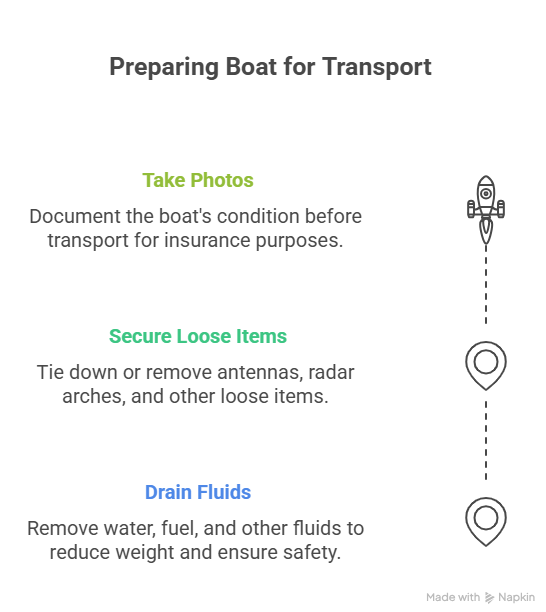
Getting your boat ready is one of the most important parts of moving it safely. You need to secure everything so nothing gets damaged on the way.
This keeps your boat stable while loading, moving, and unloading.
We also suggest that you take photos of your boat before the trip. They help if anything happens during boat transport.
When understanding how to transport a houseboat, loading it onto the trailer or transport platform is an important step. It takes the right equipment and know-how.
Sometimes we need hydraulic lifts or winches, depending on the boat’s size and weight. Once it’s on, we secure it with straps or special supports so it doesn’t move during the trip.
Delays can happen from weather, road changes, or construction while your boat is on the road. We do our best to deliver on time, but it’s better for you to plan for possible delays.
We carefully unload your boat and check its condition and alignment when it arrives. After transport, you should reconnect systems like batteries and fuel, inspect the hull, and make sure all equipment is secure.
It’s also a good idea to schedule a cleaning at the marina to get your boat looking its best.
| Maintenance Area | Tip | Why It Matters |
| Hull Inspection | Look for cracks, blisters, or scratches before and after the move. | Helps stop water leaks and keeps the structure strong. |
| Engine & Propulsion | Check the engine, fuel lines, and propeller once the boat arrives. | Keeps the engine running smoothly and avoids costly repairs. |
| Electrical System | Test the batteries, wiring, and all connections. | Prevents power issues and keeps all systems working. |
| Safety Equipment | Make sure life jackets, fire extinguishers, and navigation lights are ready. | Ensure that safety gear is ready and up to standard. |
| Interior & Fixtures | Secure cabinets, appliances, and furniture before you move the boat. | Stops them from getting damaged. |
| Weatherproofing | Check seals, hatches, and canvas covers for damage. | Protects against water getting in and weather damage. |
| Mooring & Anchoring | Inspect ropes, chains, and fenders to keep your boat safe. | Keeps them ready for safe docking. |
Are you thinking about how to transport a houseboat safely? Set Sail Boat Transport is here! For big or small boat transport, we will help you through everything, from the paperwork to the actual move. Reach out today for a quote, and let's get your boat to its new destination.
[/vc_column_text][/vc_column][/vc_row][vc_row][vc_column][vc_tta_accordion][vc_tta_section title="1. How do people move houseboats?" tab_id="1761943587137-13f70de8-a6d5"][vc_column_text css=""]People usually move their houseboats by using specialized trailers or barge transport. You can get in touch with us to handle professional loading and safe delivery across land or waterways.[/vc_column_text][/vc_tta_section][vc_tta_section title="2. How expensive is it to move a houseboat?" tab_id="1761943587149-0e81f191-4d34"][vc_column_text css=""]Moving your houseboat can cost you $5 to $16 per mile. The price depends on size, weight, route, and extra services like permits, pilot cars, or insurance.[/vc_column_text][/vc_tta_section][vc_tta_section title="3. Should you transport a boat with the motor up or down?" tab_id="1761943702339-047ace76-c6c7"][vc_column_text css=""]You should keep the motor down for stability. Just make sure that it’s not too low since it can come in contact with roads or obstacles during transport and cause damage.[/vc_column_text][/vc_tta_section][vc_tta_section title="4. What are the common houseboat problems?" tab_id="1761943724549-1f15b3a8-783c"][vc_column_text css=""]Common problems include hull leaks, engine trouble, electrical issues, blocked plumbing or sewage, and damage from water exposure.[/vc_column_text][/vc_tta_section][vc_tta_section title="5. How do houseboats get rid of sewage?" tab_id="1761943723384-a5b35538-f0b5"][vc_column_text css=""]Houseboats handle sewage with onboard systems. They either use holding tanks that are emptied at pump-out stations or composting systems for waste.[/vc_column_text][/vc_tta_section][/vc_tta_accordion][/vc_column][/vc_row][vc_row][vc_column][vc_column_text css=""]
Knowing how to transport a houseboat safely means planning carefully, following the rules, and working with a team you can trust.
You need to check size and weight, decide the route, get the boat ready, and inspect it after delivery. We guide you through all these steps, use the right equipment, and make sure your boat gets there in good condition.
Ready to relocate your boat? Contact us today! We will handle the challenging tasks so you can get back to cruising and enjoying.[/vc_column_text][/vc_column][/vc_row]